
LITTLE ROCK (August 11, 2026)— Preparing the next generation of conservation professionals starts with giving them opportunities to learn, explore, and gain meaningful hands-on experience. For the past several years, the Little Rock Zoo’s internship program has provided college students with the chance to do just that while working alongside experienced professionals from a variety of backgrounds.
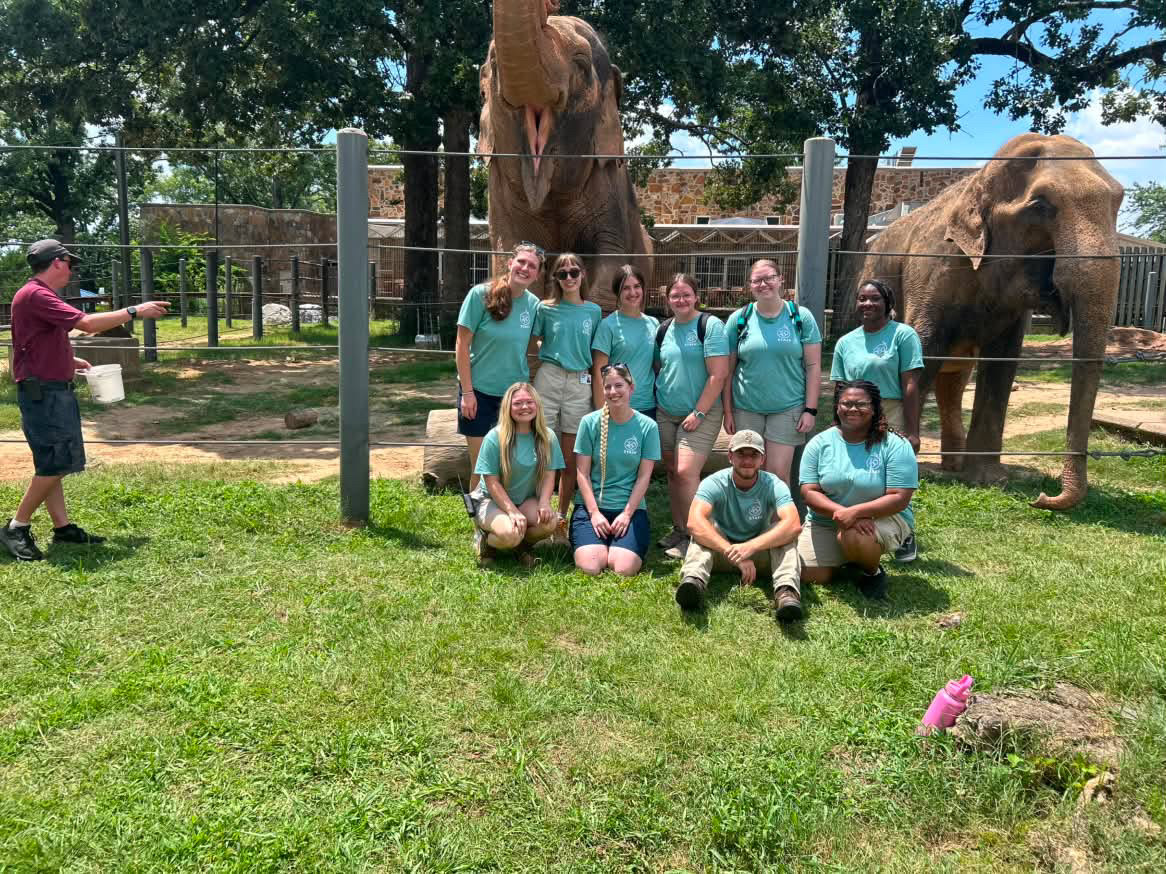
Summer 2026 Interns with Elephants Babe and Zina. Photo courtesy of Intern Catie Miller.
No two internship experiences are exactly alike. Opportunities are shaped by the needs of each department, the work happening at the Zoo, and the interests and goals of each student. Some interns take on specific projects alongside Zoo staff, while others focus on developing the practical, day-to-day skills essential to their chosen field. When opportunities allow, interns may also explore work related to their own professional interests.
From developing and facilitating educational programs to collecting research data, supporting horticulture initiatives, and learning the fundamentals of animal care, interns have the opportunity to put what they’ve learned into practice. Along the way, they gain a deeper understanding of the many people, skills, and disciplines it takes to care for wildlife and advance the Zoo’s conservation mission.
Meet some of the students who spent their summer learning, contributing, and gaining experience at the Little Rock Zoo.
Meet Our Summer Interns
Horticulture
Intern: Collin Galloway
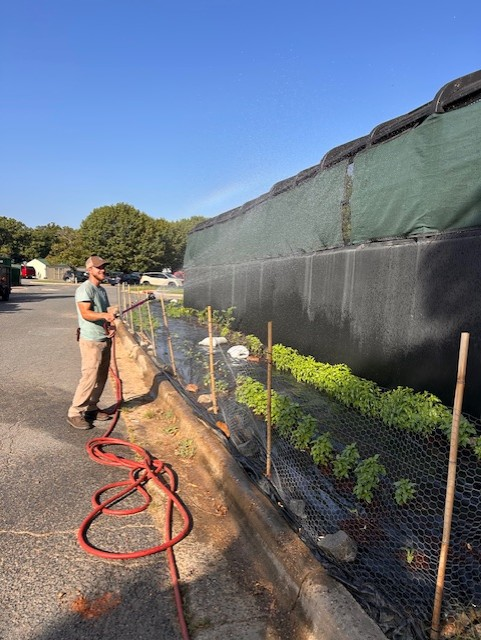
Horticulture Intern Collin with the edible garden he built. Photo by Lead Horticulturist Melissa Schock.
Summer 2026 marked an exciting milestone for the Little Rock Zoo with the addition of our first-ever Horticulture Internship. Working alongside Lead Horticulturist Melissa Schock, Collin Galloway transformed an underutilized green space near the Zoo’s Administration Building into an edible garden that will help provide fresh produce for the Zoo’s great apes.
Although the edible garden provides welcome variety and enrichment in the great apes’ diets, one of its greatest benefits is supporting their health. Freshly harvested produce delivers important vitamins, micronutrients, and naturally occurring microbes while also encouraging natural feeding behaviors.
Bringing the garden to life wasn’t easy. Establishing young seedlings during a hot Arkansas summer while working through multiple irrigation challenges required creativity, persistence, and problem-solving. Despite those obstacles, the garden is becoming a valuable and lasting resource for the Zoo, and an example of the important role horticulture can play in animal care and conservation.
For Collin, that broader connection became one of the most meaningful takeaways from his internship.
“I think it’s important guests understand that most every plant has (or should have) a purpose.”
At the Little Rock Zoo, plants are far more than landscaping. They can provide food and enrichment for animals, create habitat for native wildlife and pollinators, and support healthy ecosystems. The edible garden is just one example of how thoughtful horticulture can directly support the animals in our care while demonstrating the important connections between plants, wildlife, and conservation.
Conservation Learning and Engagement
Interns: Mollie Bluth & Livi Moore
Connecting people with wildlife is an important part of the Little Rock Zoo’s conservation mission. Over their nine-week internship, Mollie Bluth and Livi Moore explored the many ways our Conservation Learning & Engagement team creates those connections while building their own skills as educators.
Their summer began by shadowing Zoo educators, attending keeper chats, and gaining firsthand experience with Zoofari Camp and Bugtopia programming. From there, they began researching, writing, and facilitating their own interpretive chats about animals at the Zoo.
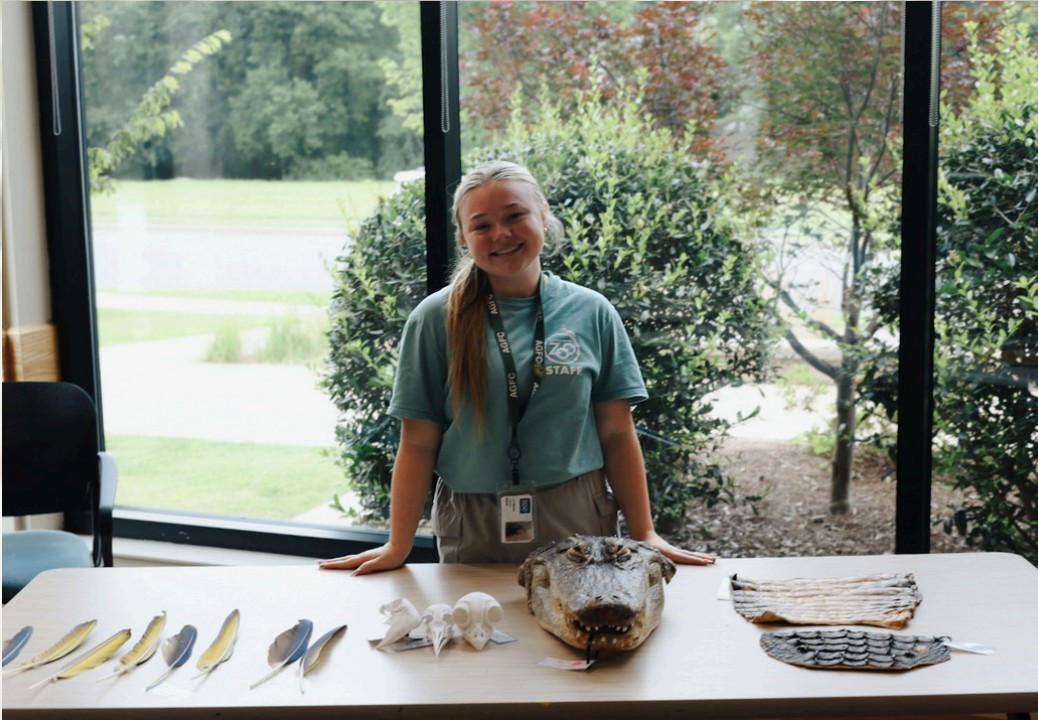
Conservation Learning and Engagement Intern Livi with various biofacts. Photo courtesy of Intern Livi Moore.
They also learned to incorporate biofacts—items such as feathers, skulls, shells, and other natural materials—into guest experiences. Livi developed interpretive chats related to radiated tortoises and Abyssinian ground hornbills, while Mollie focused on Malayan tigers and lemurs.
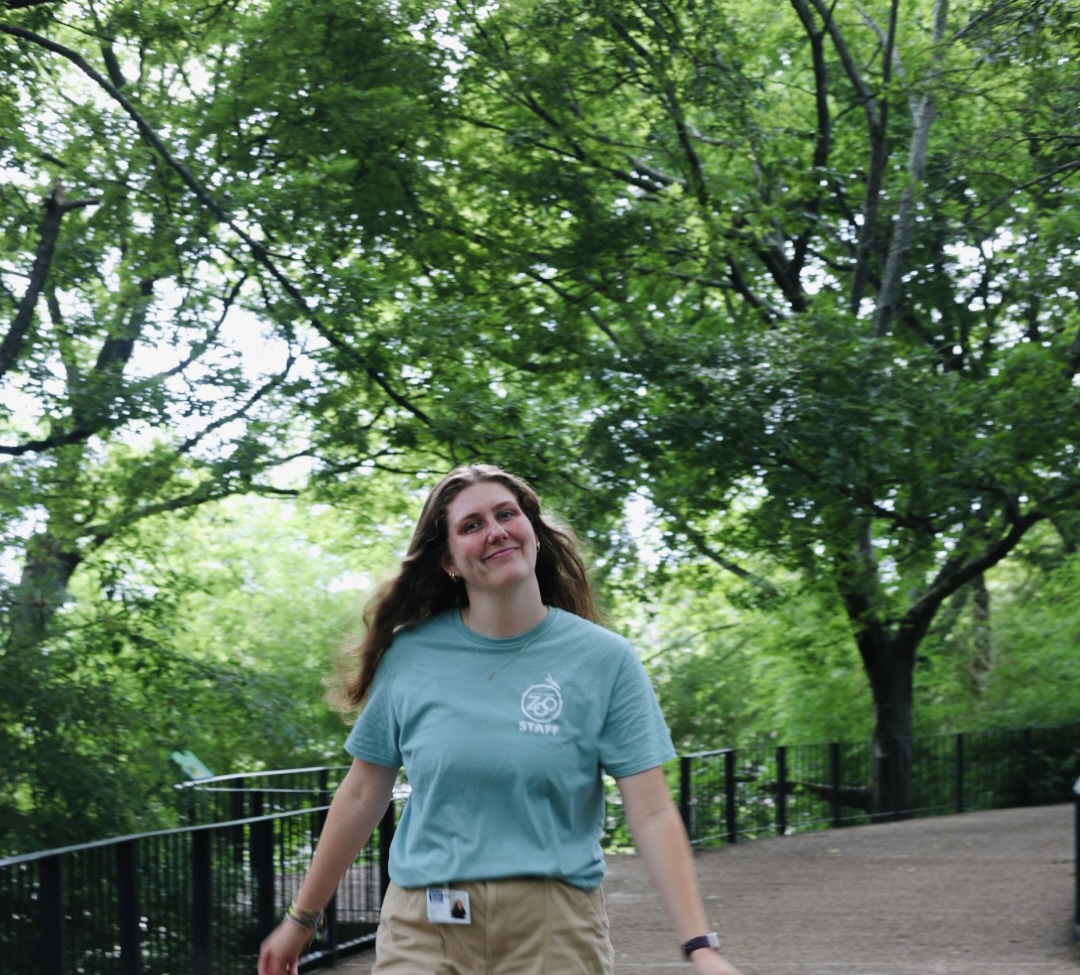
Conservation Learning and Engagement Intern Mollie. Photo courtesy of Intern Mollie Bluth.
As their skills grew, they got a behind-the-scenes look at how educational programs are built, including learning to use logic models to connect program activities with intended outcomes. All of that experience culminated in curriculum development for the Zoo’s Caterpillar Club and camp programs—and their work will continue beyond the internship as that curriculum is incorporated into upcoming educational programs.
Their time at the Zoo demonstrate that conservation education is about much more than sharing animal facts. It’s about creating meaningful experiences that spark curiosity, build understanding, and inspire people to care about wildlife and the natural world.
Zoological Research
Intern: Alexis Stewart
Exceptional animal care begins with understanding the animals in our care. Research allows Zoo staff to make evidence-based decisions about animal welfare, habitat design, enrichment, and husbandry practices.
Working alongside Conservation and Research Coordinator Dr. Laura Bernstein-Kurtycz, Ph.D., Alexis Stewart contributed to four scientific studies, collecting more than 36 hours of behavioral observation data across seven animal species. Throughout her internship, Alexis used behavioral research methods including ethograms—structured observations used to record when and how often specific behaviors occur.
For one study, Alexis contributed data to an ongoing behavioral study of one of the Zoo’s foxes, adding to three years of behavioral observations that help staff better understand the individual’s behavior over time.
Alexis also completed more than 22 hours of observations comparing poison dart frogs across three habitat types: a bioactive habitat, a planted but not fully bioactive habitat, and a more basic habitat. Frogs in both the bioactive and planted habitats showed higher rates of locomotion and breeding behaviors than those in the basic habitat, with the highest rates observed in the bioactive environment.
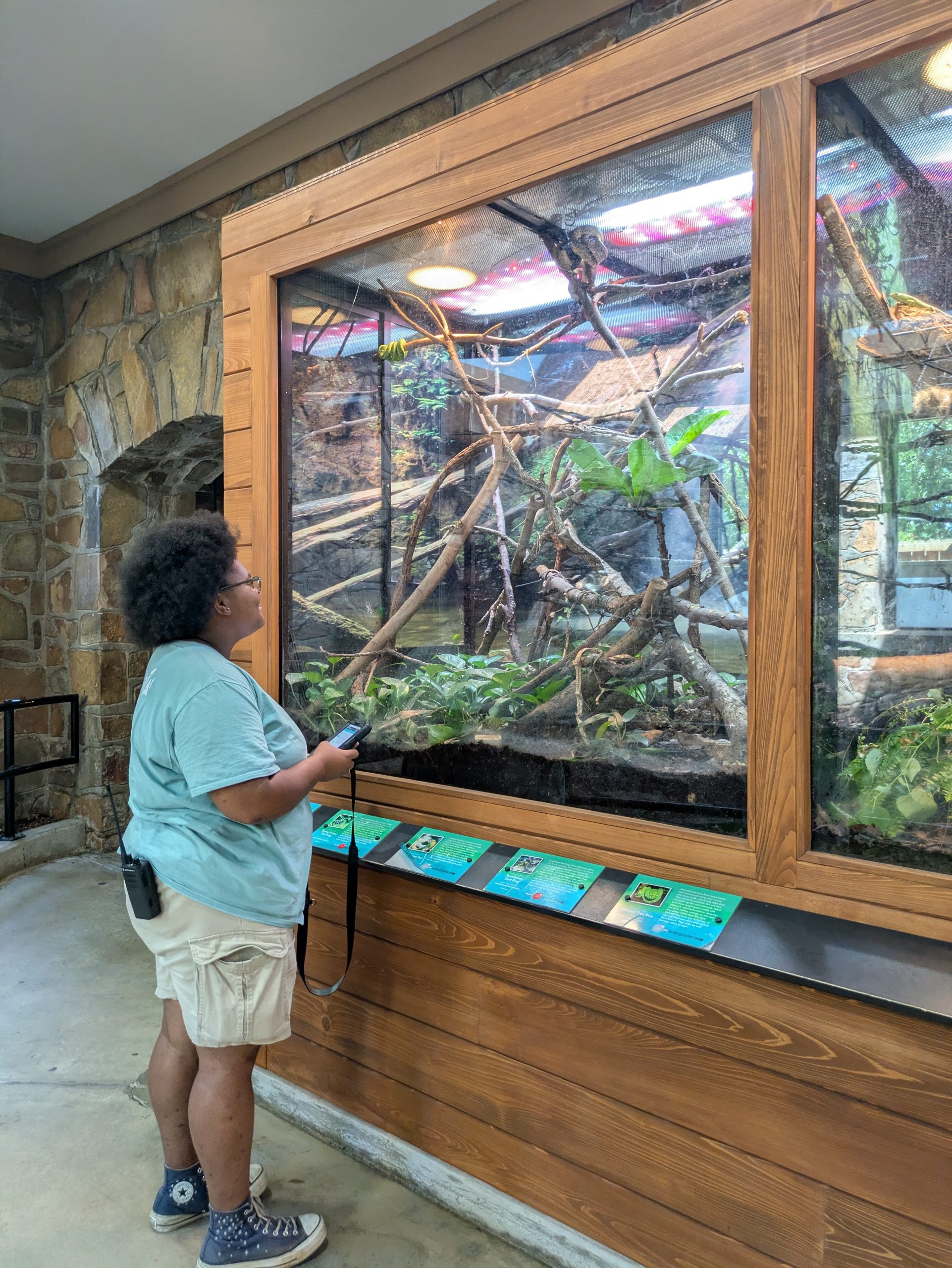
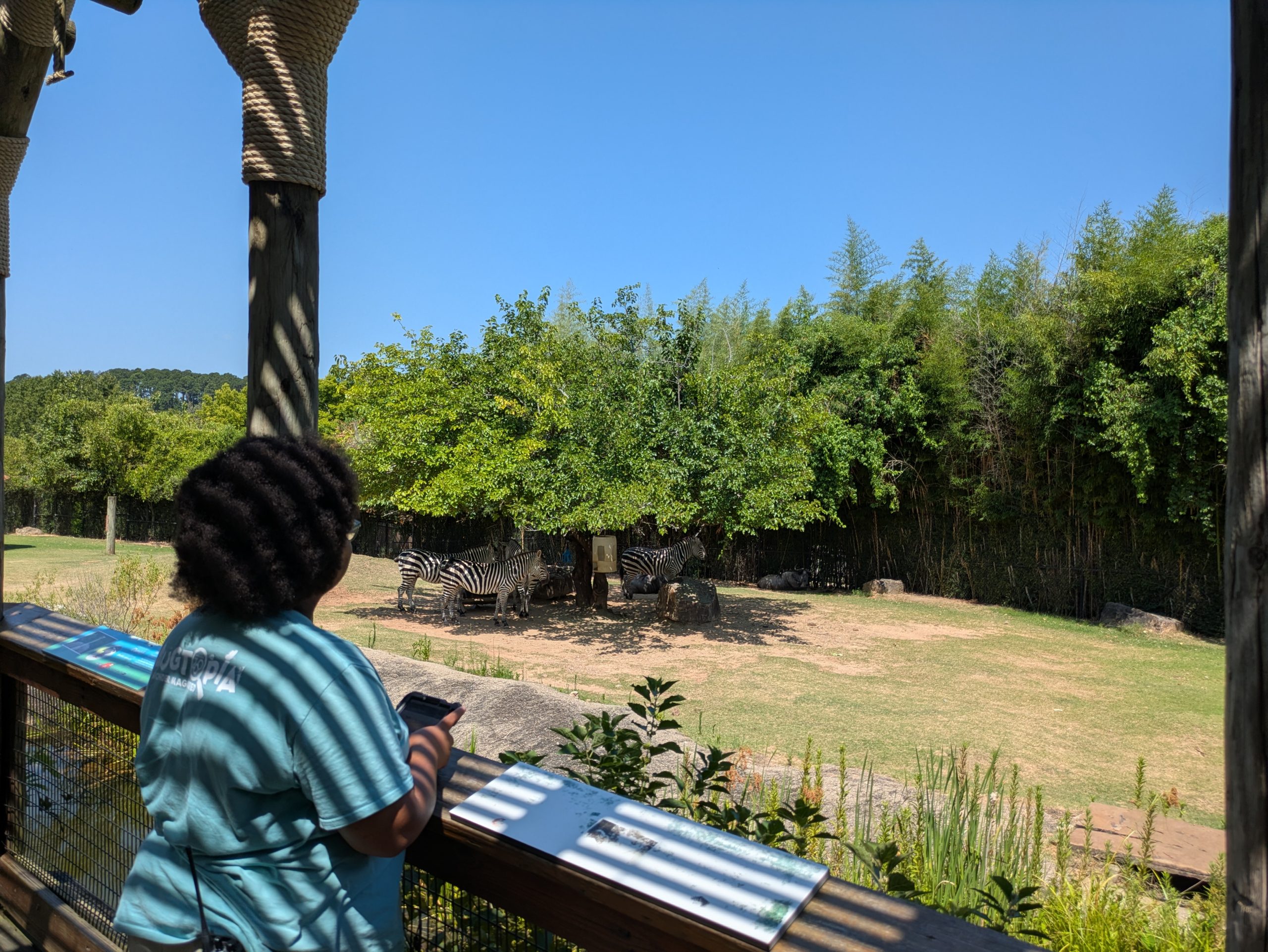
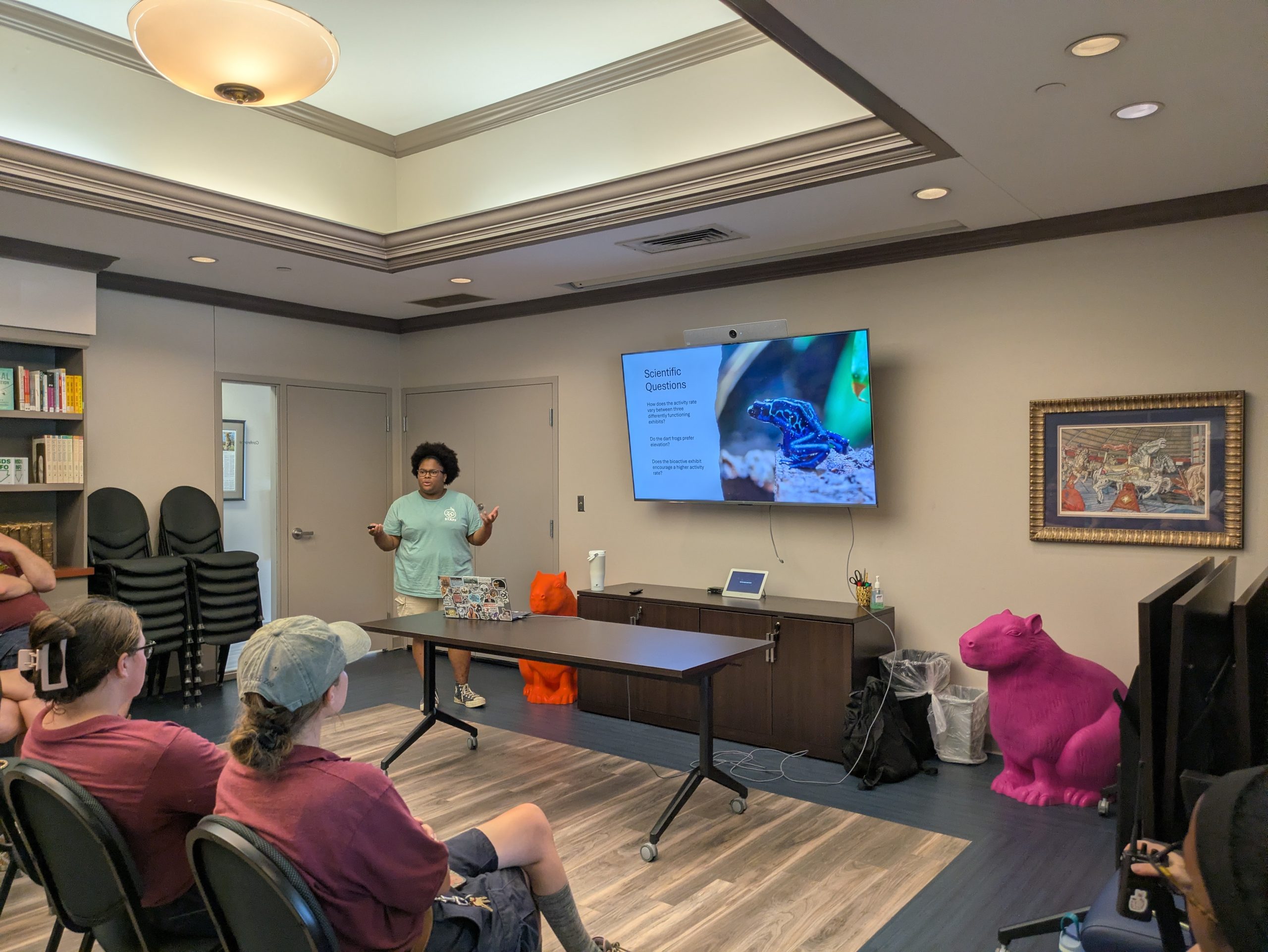
Zoological Research Intern Alexis performing behavioral observations in the Reptile House, at the Veldt, and presenting her observations to Zoo staff. Photos courtesy of Conservation and Research Coordinator Dr. Laura Bernstein-Kurtycz, Ph.D.
The findings suggest that while a fully bioactive habitat may be the preferred benchmark when possible, even the addition of live plants can provide meaningful benefits for these species. This information can help guide husbandry and habitat decisions for dart frogs in both current and future exhibits.
Another study examined whether increased enrichment could help reduce excessive feather-plucking behavior in one of the Zoo’s green-winged macaws. While no significant difference was observed between the three types of enrichment offered, the data showed a reduction in feather plucking when additional enrichment was available—providing useful information for this individual’s ongoing care.
Alexis also pursued a study of personal interest within the Zoo’s African Savannah (Veldt), one of larger mixed-species habitats here at the Zoo. Her observations examined how the different species used the available space and interacted with one another, helping provide a better understanding of how the animals utilize their shared environment.
At the Little Rock Zoo, behavioral data help our teams evaluate what works and make informed decisions about enrichment, habitats, and husbandry. By letting the animals guide us through their behavior, we can continually refine our practices and provide care that directly supports their health and well-being.
Animal Care
For students interested in careers working directly with animals, there’s no substitute for hands-on experience. Animal Care Internships give students the opportunity to work alongside the Little Rock Zoo’s Animal Care Teams and experience the day-to-day responsibilities involved in caring for animals.
This summer, interns gained experience across several areas of the Zoo’s animal collection. While the species and daily routines vary between areas, each internship provides an opportunity to develop practical skills and a deeper understanding of professional animal care.
Under the guidance of experienced keepers, interns may assist with daily husbandry responsibilities such as diet preparation, habitat maintenance, enrichment, behavioral observations, and record keeping while learning how animal care teams monitor the health, behavior, and well-being of the animals in their care.
Animal Care Interns
- Ginny O’Neill – Hoofstock and Birds
- Grace Burlison – Hoofstock and Birds
- Catie Miller – Primates
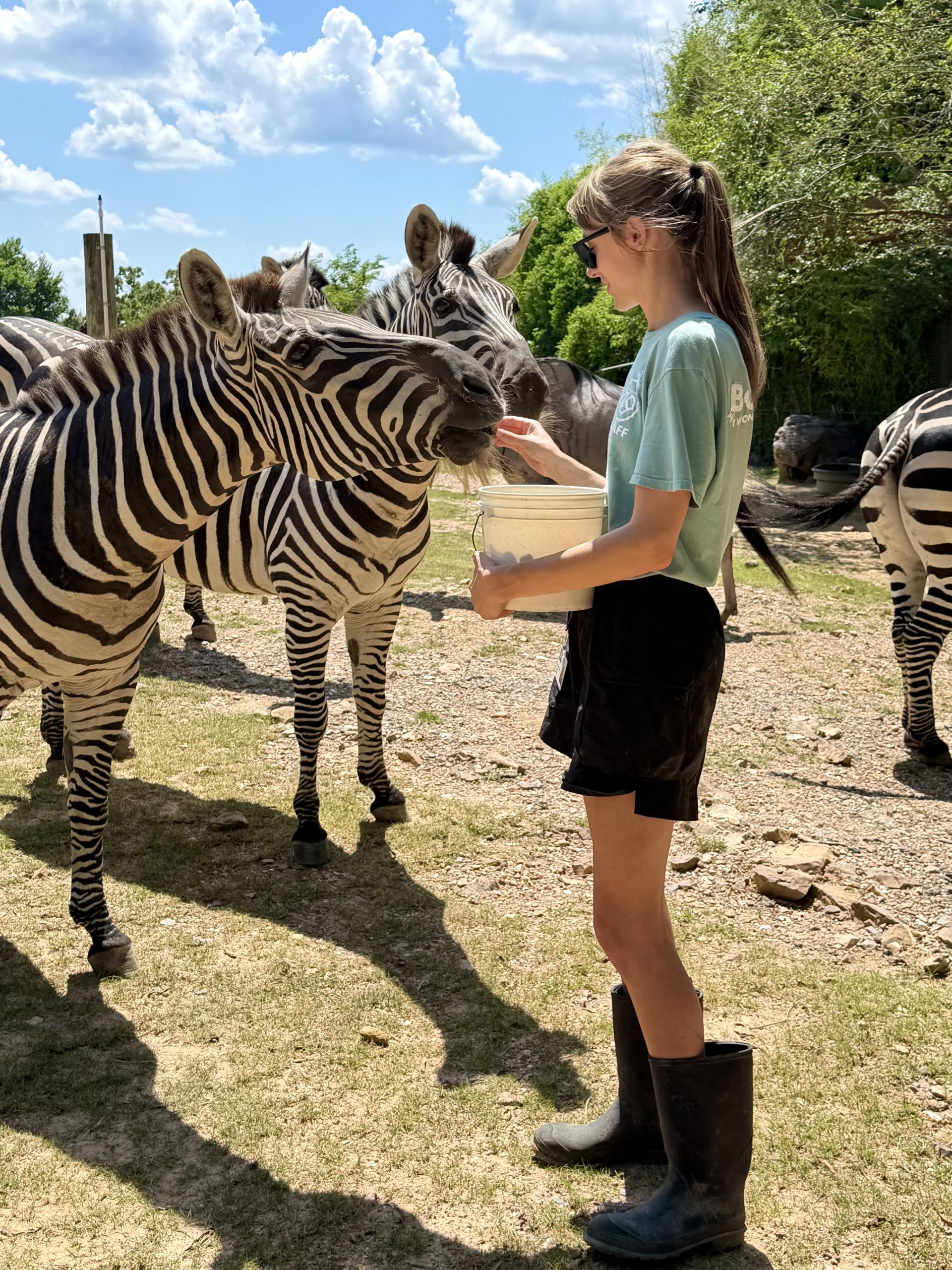
Animal Care Intern Ginny. Photo courtesy of Ginny O’Neill.
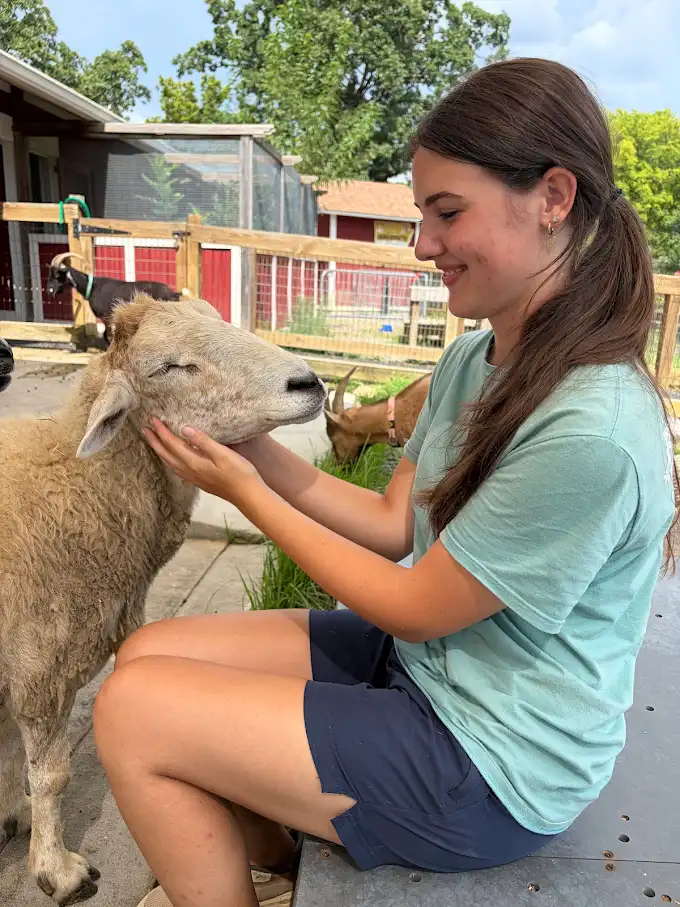
Animal Care Intern Grace with a sheep from the Heritage Farm. Photo courtesy of Grace Burlison.
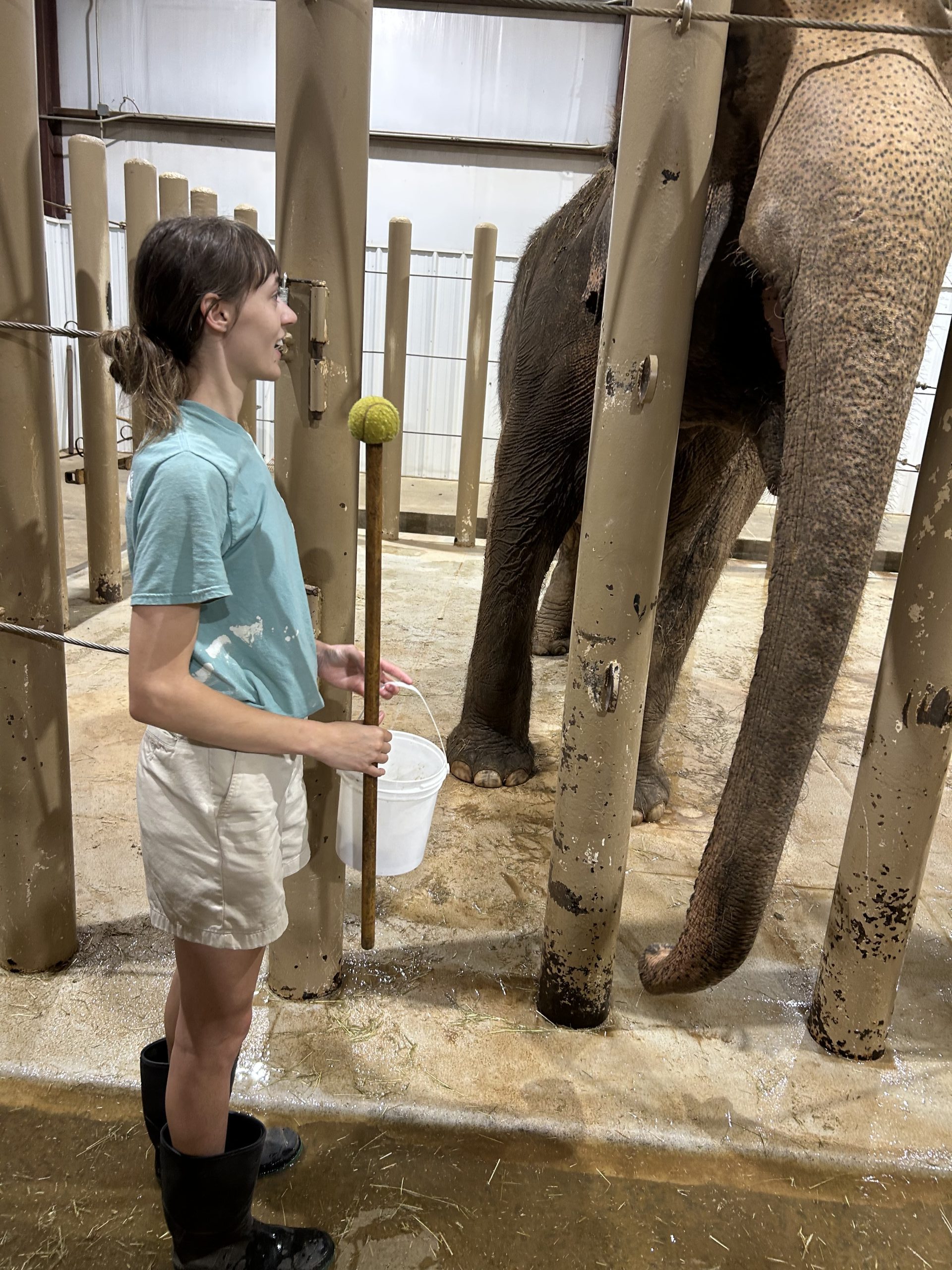
Animal Care Intern Ginny with Elephant Zina. Photo courtesy of Ginny O’Neill.
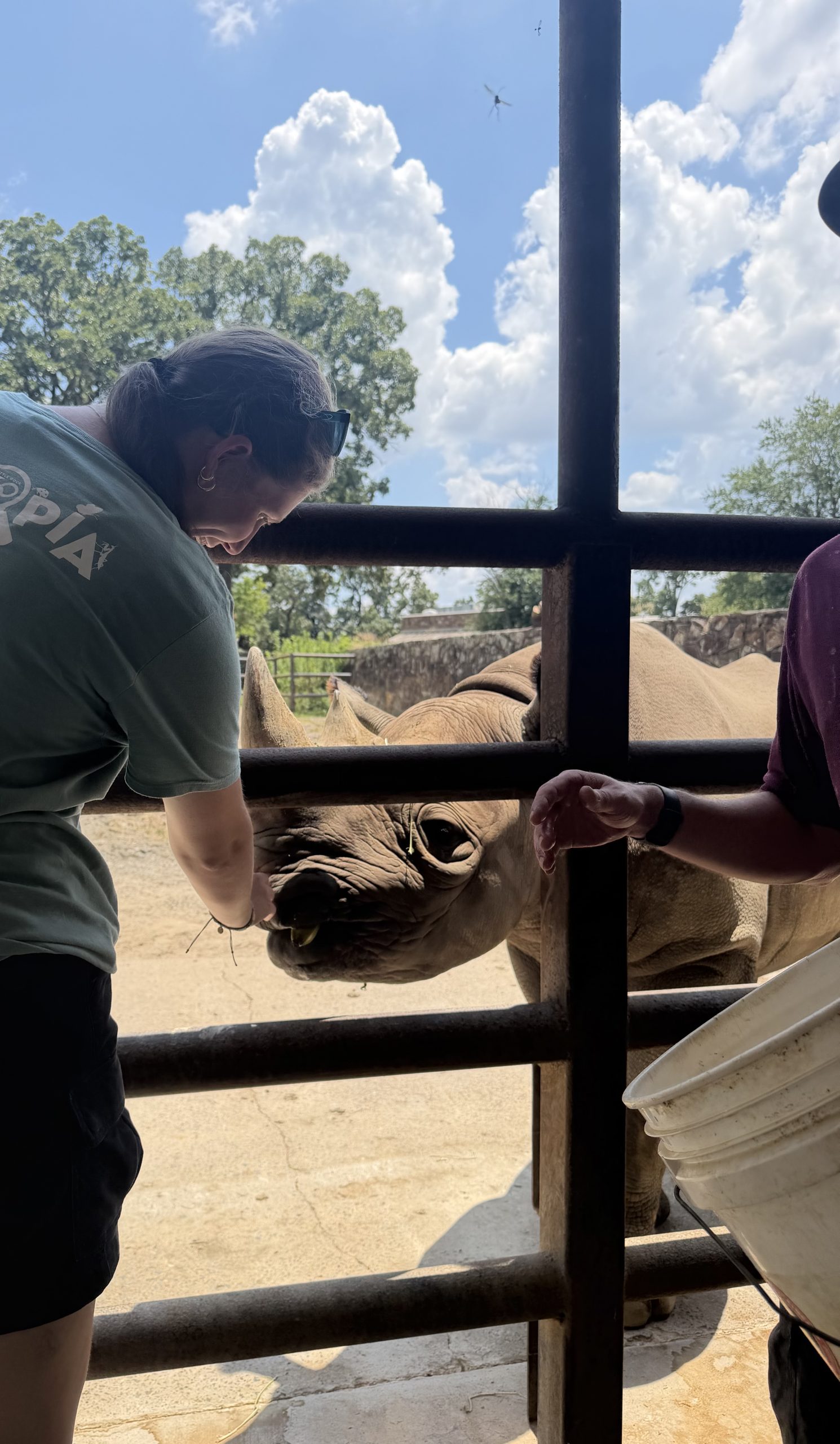
Conservation Learning and Engagement Intern Mollie, touring the Rhino Barn. Photo courtesy of Molly Bluth.
Investing in the Future
However they served this summer, each intern brought something valuable to the Little Rock Zoo.
We’re proud to play a role in preparing the next generation of conservation professionals by giving students opportunities to learn from experienced staff, explore their interests, and put their growing knowledge into practice.
We also extend a special thank you to the Zoo staff who mentor our interns throughout the summer. By sharing their time, knowledge, and expertise, they’re investing not only in the students working alongside them today, but in the future of animal care, conservation, education, and research.
Interested in Interning at the Little Rock Zoo?
Do you know a college student interested in the field of animal care or conservation?
Internship opportunities vary by department and season. Visit our Internships page for the most up-to-date information on available positions, application requirements, and deadlines. Applications for summer internships typically open in the spring, with deadlines posted as they become available.
Check back often and follow the Little Rock Zoo on social media for future internship announcements and application updates.