
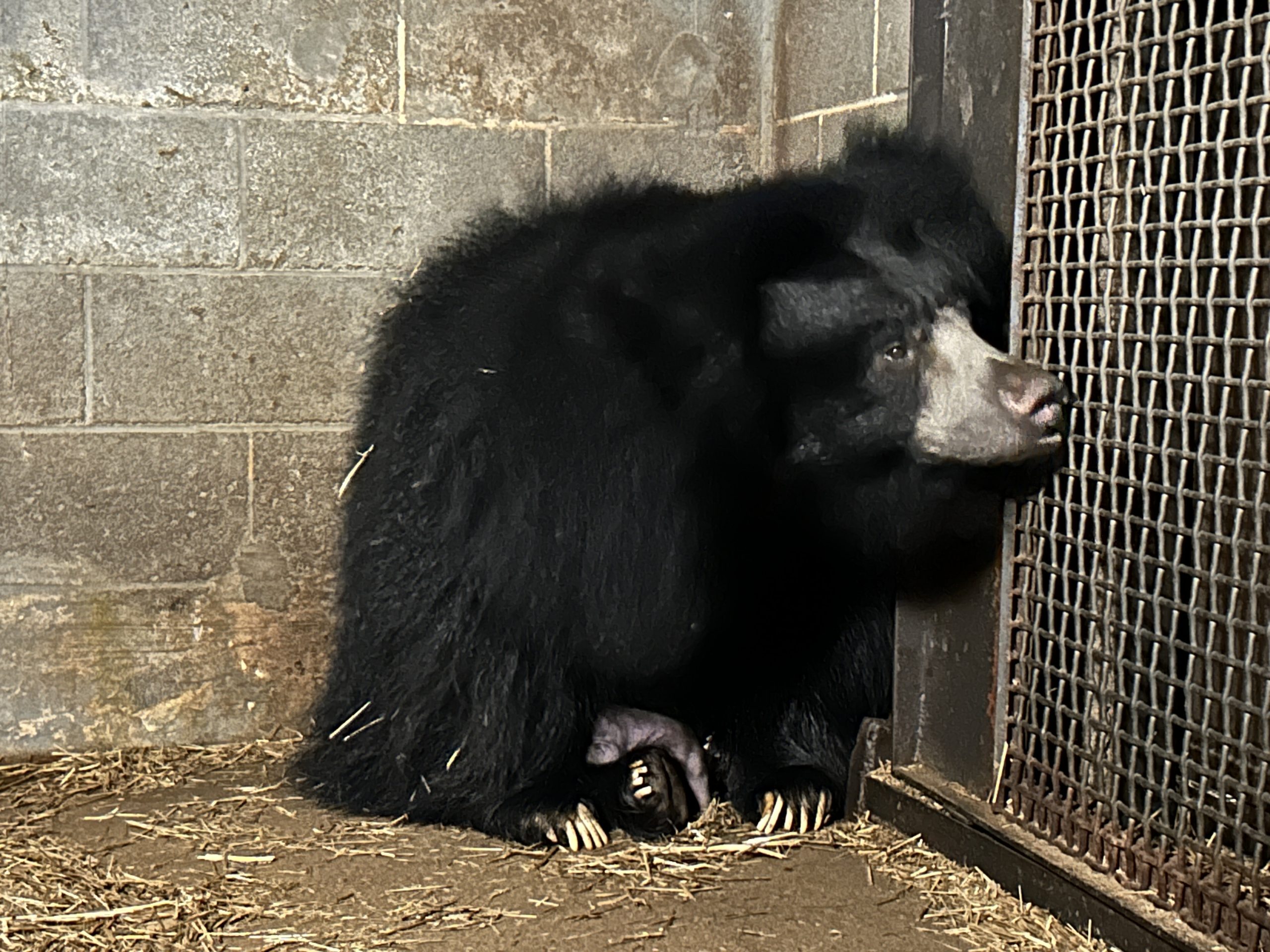
LITTLE ROCK (December 26, 2025)— We are thrilled to share that Kayla, our sloth bear mom, gave birth to two healthy cubs at the Little Rock Zoo!
This exciting milestone is the result of a collaborative effort between the Little Rock Zoo, the Philadelphia Zoo, and the Sloth Bear Species Survival Plan (SSP), an initiative focused on strengthening and sustaining the sloth bear population in human care.
Kayla gave birth in the early morning hours on Sunday, December 21, before keeper staff arrived. During routine morning checks, animal care teams observed Kayla attentively caring for her cubs. She has been understandably protective, offering only occasional glimpses of her new arrivals. The cubs can occasionally be heard squeaking and making a trilling nursing sound. Kayla herself is eating normally and remains in good health.
Zoos accredited through the Association of Zoos & Aquariums (AZA) work cooperatively through breeding and transfer plans to maintain genetically diverse and healthy animal populations. These partnerships often involve more than breeding alone, including temporary animal moves to support construction or habitat improvements.
That collaboration brought Kayla and the cubs’ father, Bhalu, to the Little Rock Zoo in November 2024. At the time, the Philadelphia Zoo was preparing for major upgrades to its sloth bear habitat and requested assistance through the SSP. While most sloth bear spaces were already filled across participating institutions, Little Rock was able to provide a temporary home for the pair during construction.
Originally, Kayla and Bhalu were expected to return to Philadelphia together once the new habitat opened. However, in spring 2025, animal care teams at both zoos, in consultation with the SSP, agreed that additional cubs were needed within the population. Taking into account Kayla’s prior experience as a mother and her calm temperament, a joint decision was made to allow the bears to remain together for the summer breeding season rather than separating them. That decision proved successful, resulting in the birth of these two cubs.
The Little Rock Zoo is proud to partner with the Philadelphia Zoo and the Sloth Bear SSP on this important conservation effort. New sloth bear habitats at the Philadelphia Zoo are scheduled to open in spring 2026, and we look forward to continuing this collaboration in support of the species’ future.
Growing Behind the Scenes
While everyone is eager to see the cubs and discover their genders, Kayla and her cubs will remain behind the scenes for the next several weeks, allowing them time to bond and gain strength. A gender reveal will be shared once our carnivore team can safely determine the cubs’ sexes.
The cubs are expected to begin appearing to guests in early spring. Stay tuned—we will continue to share updates as they reach key milestones and grow.
Sloth Bear Conservation
The arrival of these cubs is exciting, but it also reflects a much bigger conservation story. Sloth bears face ongoing threats in the wild, including habitat loss and increasing human–wildlife conflict.
Through partnerships like the Sloth Bear Species Survival Plan, accredited Zoos work together to support healthy populations in human care while also contributing to conservation efforts in the wild. The Little Rock Zoo is proud to be part of this work.
Recently, members of our team returned from India, where they worked alongside conservation partners to support sloth bear research, conflict mitigation, and community education—efforts that help protect both sloth bears and the people who share their landscape. Learn more about this work in our Notes from the Field series, which highlights how Zoo staff and partners are working together to protect sloth bears and their habitats.
In addition to this fieldwork, the Little Rock Zoo supports wildlife conservation in many ways—both locally and globally. Simply visiting the Zoo helps make this work possible. The parking fees collected during admission directly support conservation efforts, helping fund research, habitat protection, and community-based programs. This means that every visit to the Zoo contributes to conservation, making your day a meaningful way to support wildlife both locally and around the world.