
Photos Courtesy of Debbie Thompson
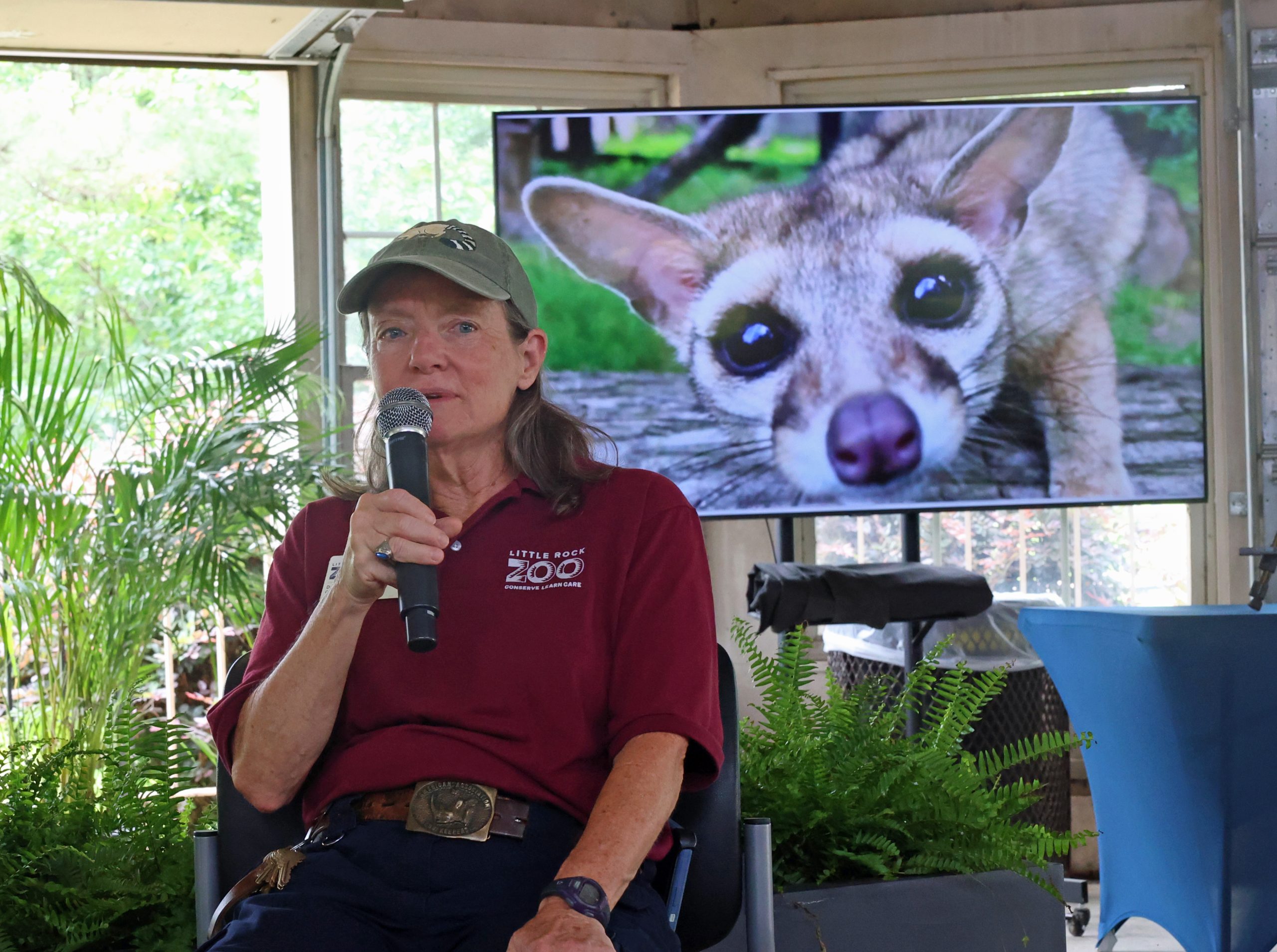
Debbie speaking during the Little Rock Zoo’s Centennial Celebration in summer 2025.
LITTLE ROCK (November 1, 2026)— Before Debbie Thompson arrived at the Little Rock Zoo in September 1982, she had packed her car and was headed south from Illinois for a job as a swing carnivore keeper.
She couldn’t have known then just how much both her career—and the Little Rock Zoo—would change in the decades ahead.
More than 40 years later, Debbie has gone from caring for small cats and learning the personalities of bears to helping manage animal populations across accredited zoos, contributing to national animal care standards and supporting sloth bear conservation half a world away.
Along the way, she’s watched the Little Rock Zoo welcome new species, build new habitats, expand its Animal Care and Veterinary Teams and become increasingly involved in conservation efforts around the world.
And Debbie has been part of that evolution nearly every step of the way.
A Childhood Dream Becomes a Career
Debbie grew up in a small town in Illinois, where animals were always an important part of her life.
One of the highlights of each year was visiting her grandmother in St. Louis—because those trips also meant a visit to the St. Louis Zoo.
Debbie remembers watching the keepers and wanting to do exactly what they were doing: care for animals most people would never have an opportunity to work with.
At the time, however, zookeeping wasn’t necessarily viewed as a profession that required a college education. Debbie knew she wanted to attend college, so she initially thought becoming a veterinarian might be the best way to combine her interests.
As she learned more, she realized what she really wanted was to care for animals throughout their lives—not only when they were sick.
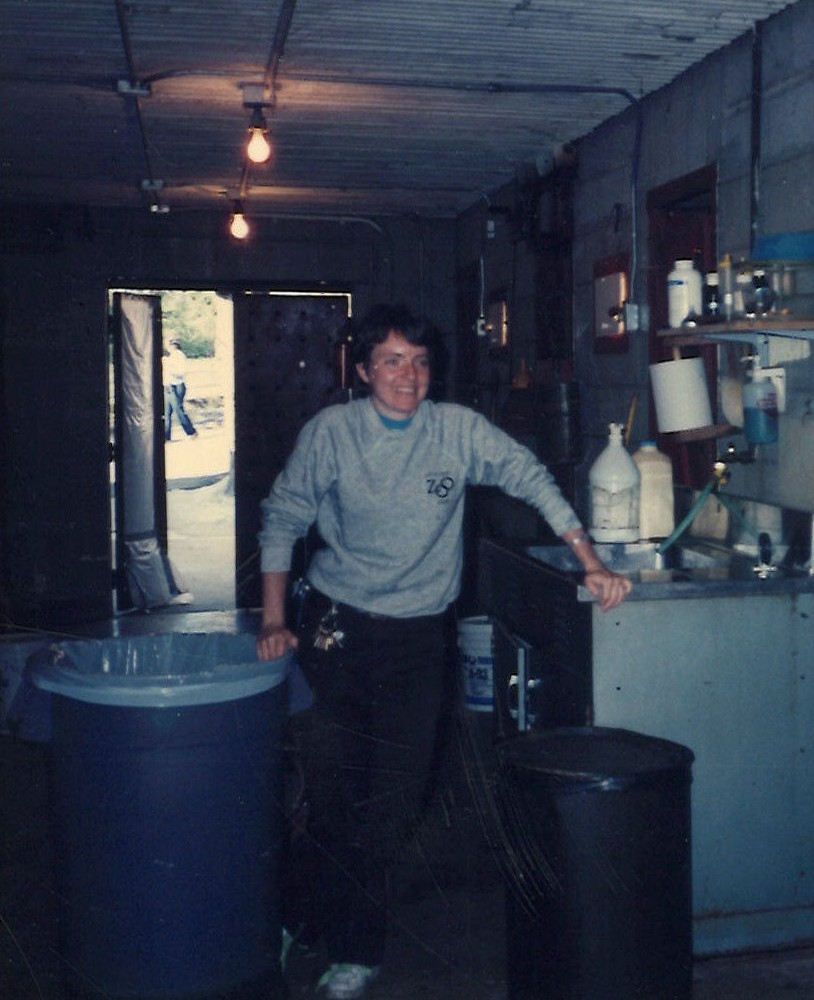
Debbie behind the scenes in the Zoo’s bear area in 1988.
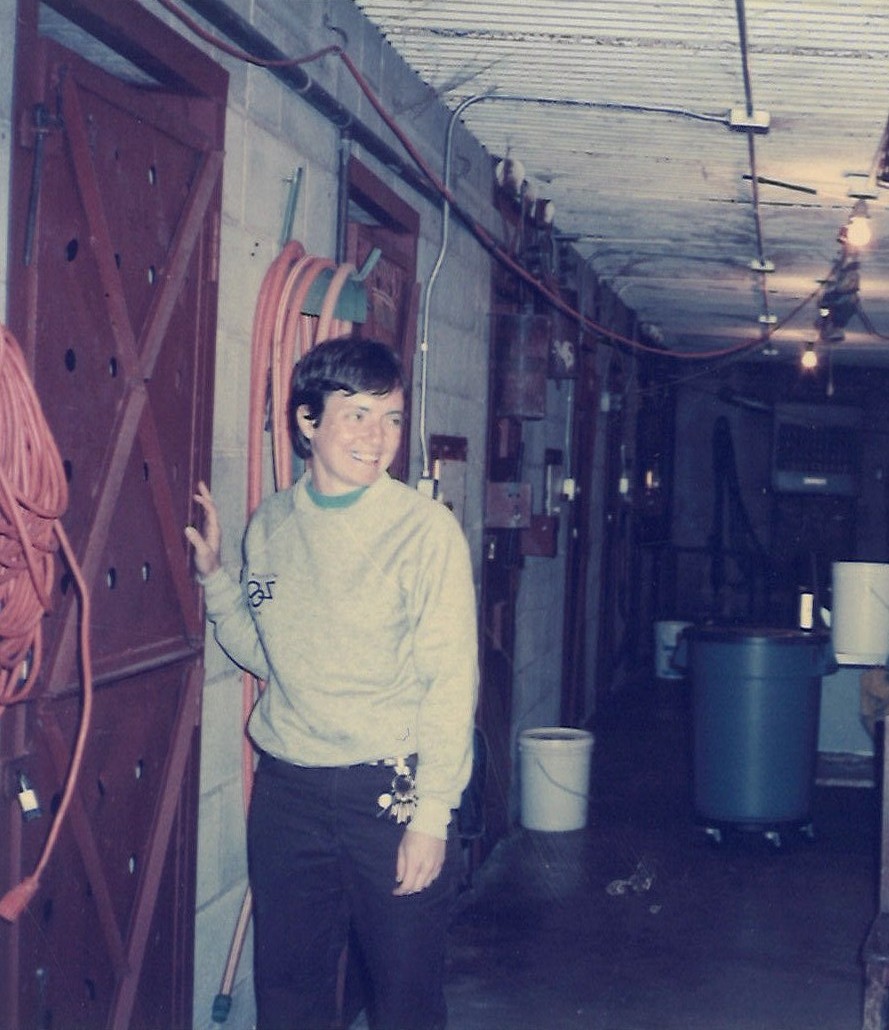
She studied subjects including mammalogy, ornithology, evolution and animal behavior at the University of Illinois while gaining practical experience through summer work at veterinary clinics and the Glen Oak Zoo in Peoria.
After graduating in May 1982, Debbie began sending letters and résumés to zoos across the country.
There was no internet and no online job board to search. Finding openings was difficult, and zoos often hired locally.
Persistence paid off.
Debbie received an interview in Little Rock, packed her car and, made the trip to Arkansas.
In September 1982, she began her career at the Little Rock Zoo.
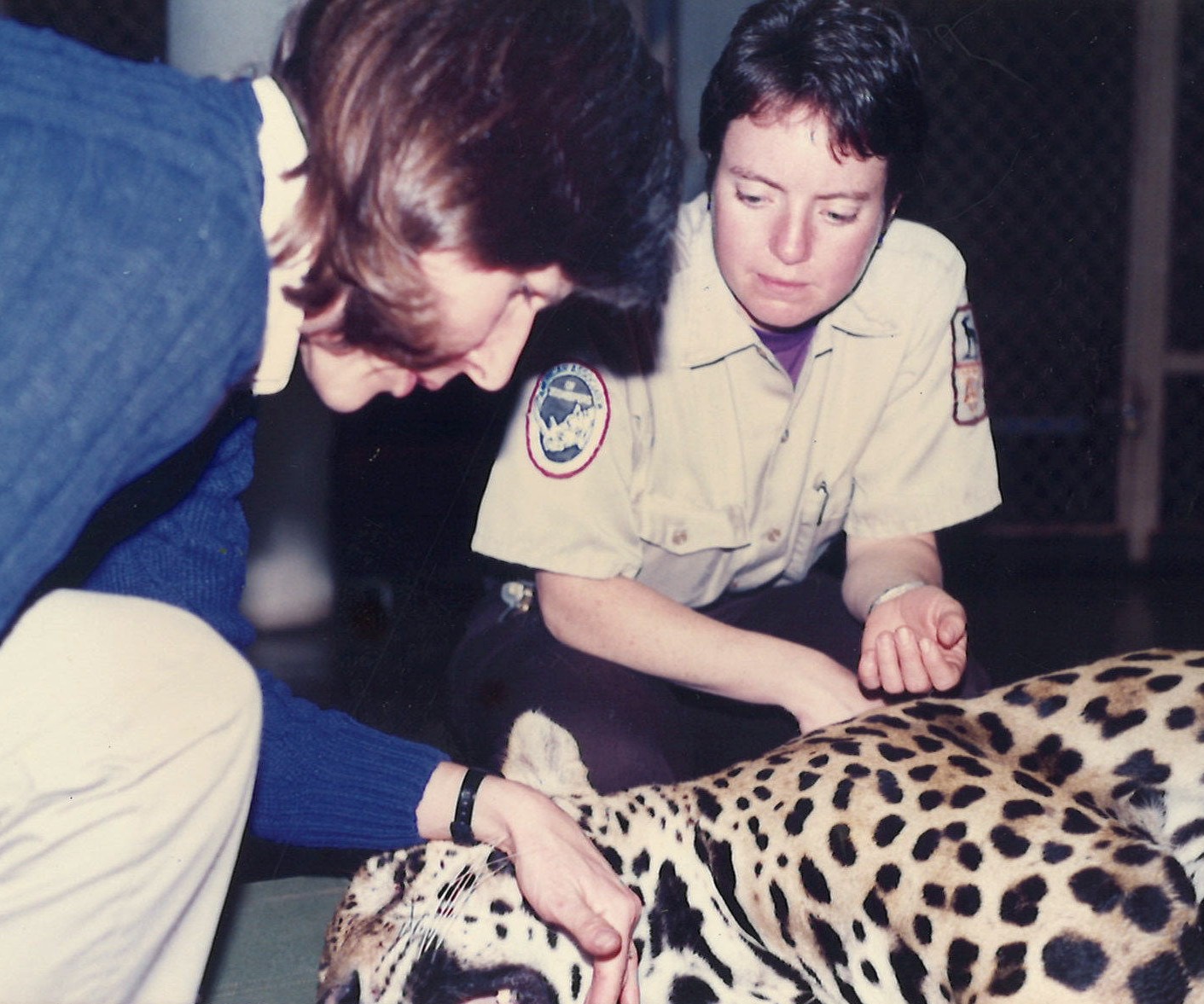
Debbie assisting with a jaguar examination.
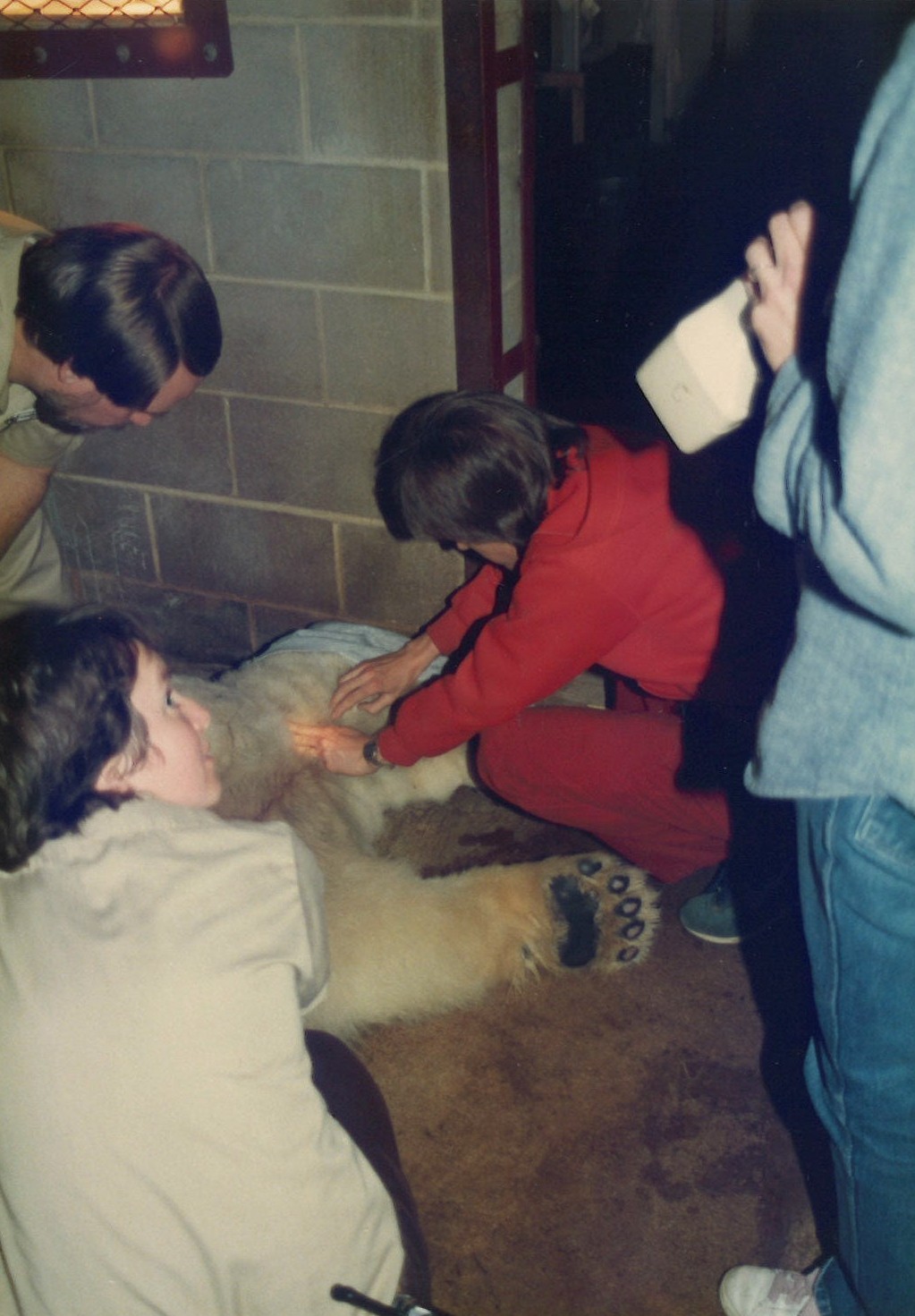
Debbie assisting with a polar bear veterinary examination in 1986.
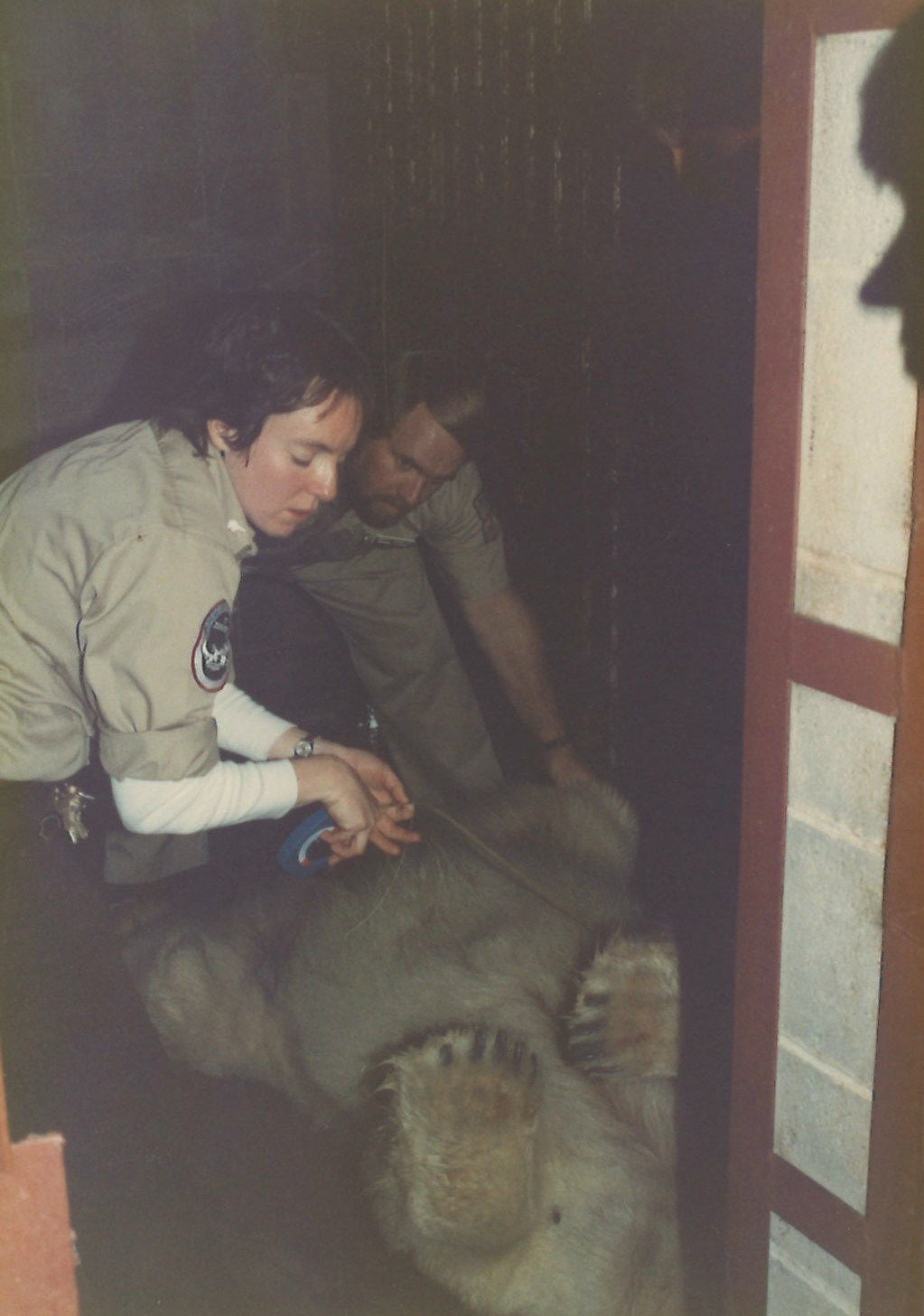
Debbie taking measurements of a polar bear during a veterinary examination in 1986.
Growing Alongside the Zoo
Debbie started as a carnivore keeper, working primarily in the small cat area.
She had always loved cats, both large and small. Bears were another story.
“I knew little about bears,” she recalled.
That didn’t last long.
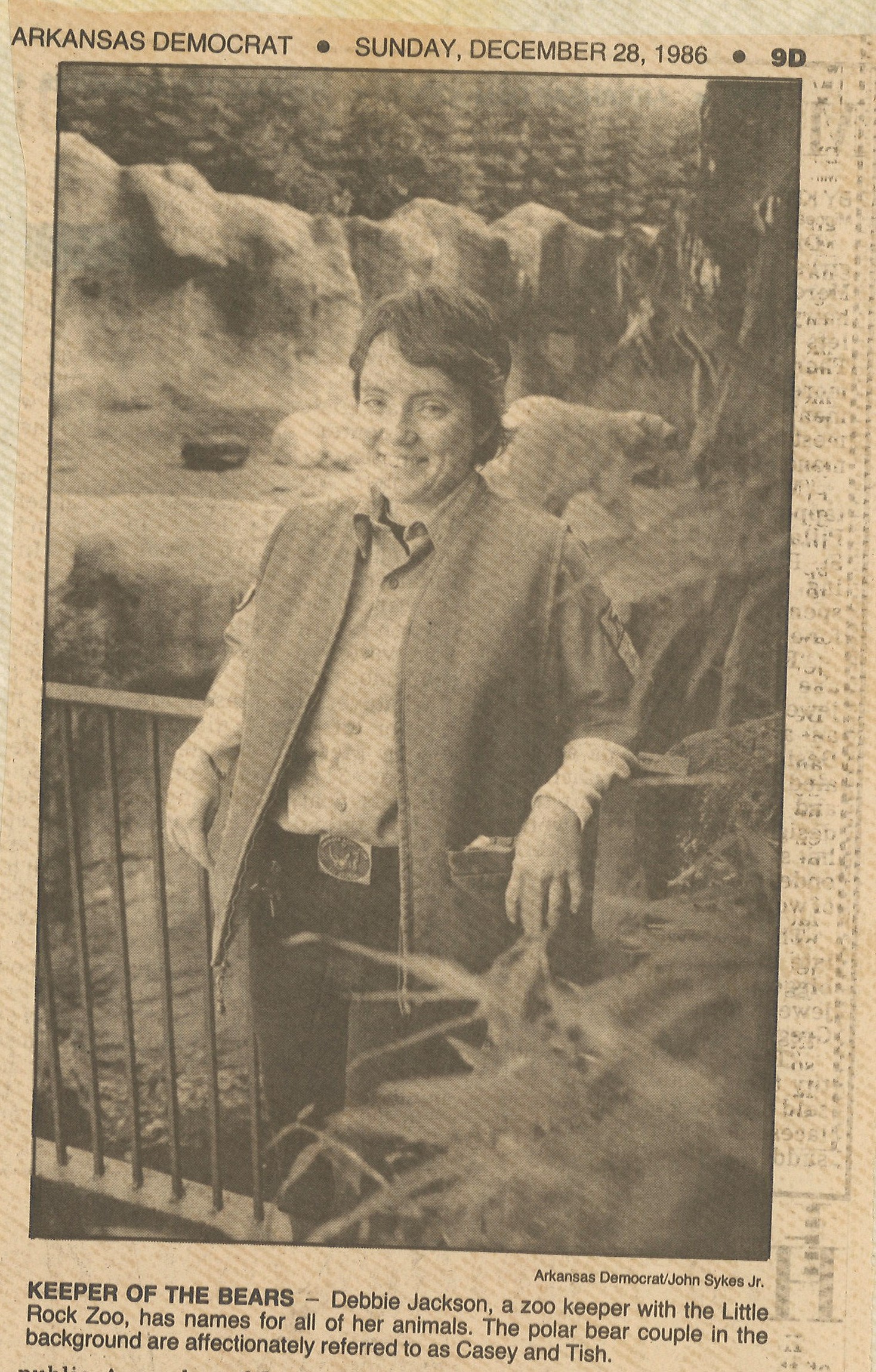
Debbie featured in a 1986 article published by the Arkansas Democrat.
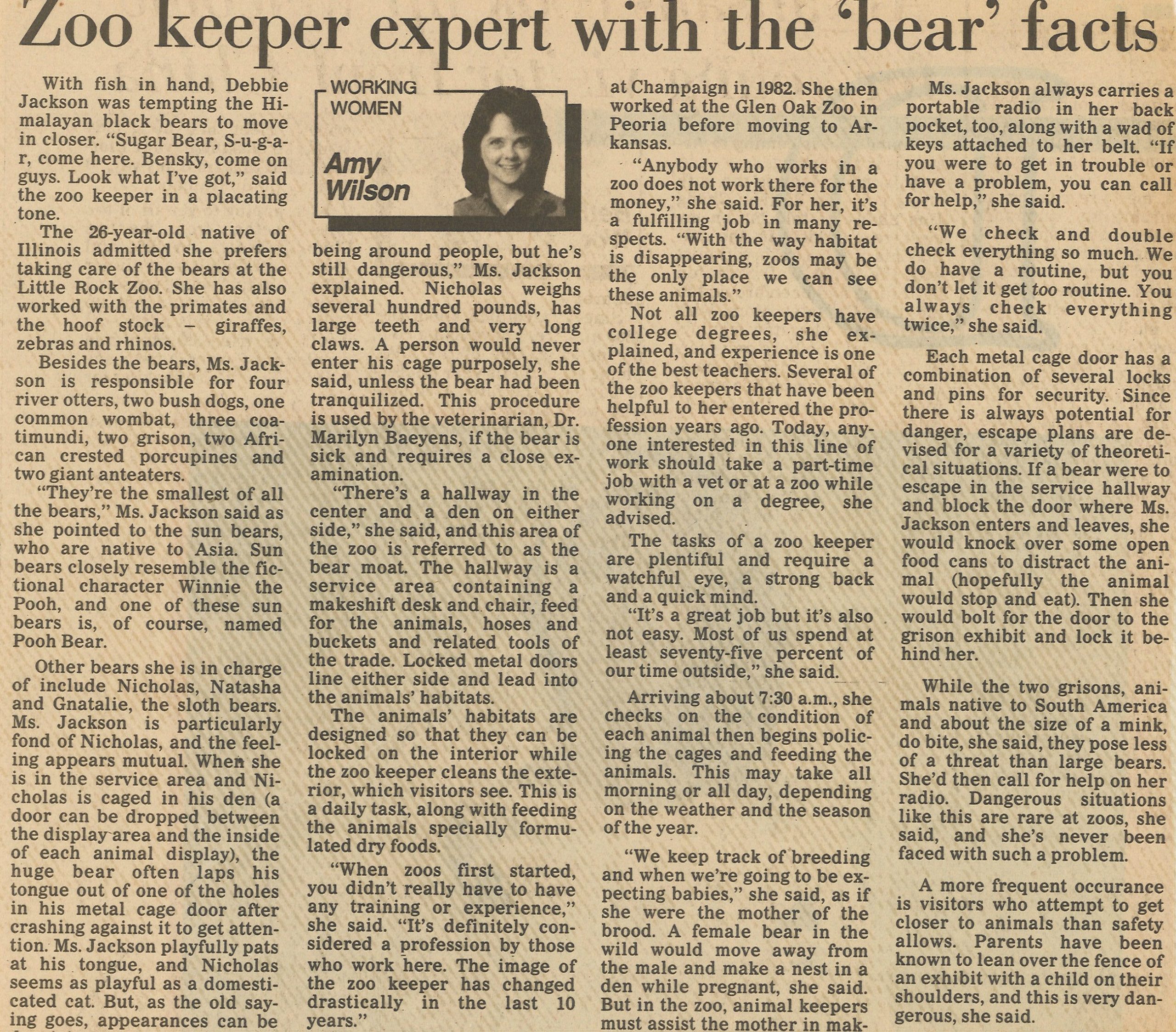
1986 newspaper article published by the Arkansas Democrat highlighting Debbie and her work at the Little Rock Zoo.
Bears quickly became one of Debbie’s favorite groups of animals and would eventually shape a significant part of her career.
During her first few years, however, Debbie intentionally rotated through different areas of the Zoo. She spent time working with primates and hoofstock to become a more well-rounded animal care professional before returning to carnivores.
In 1987, she became Carnivore Senior Keeper.
Then, in 1996, she became Carnivore Curator.
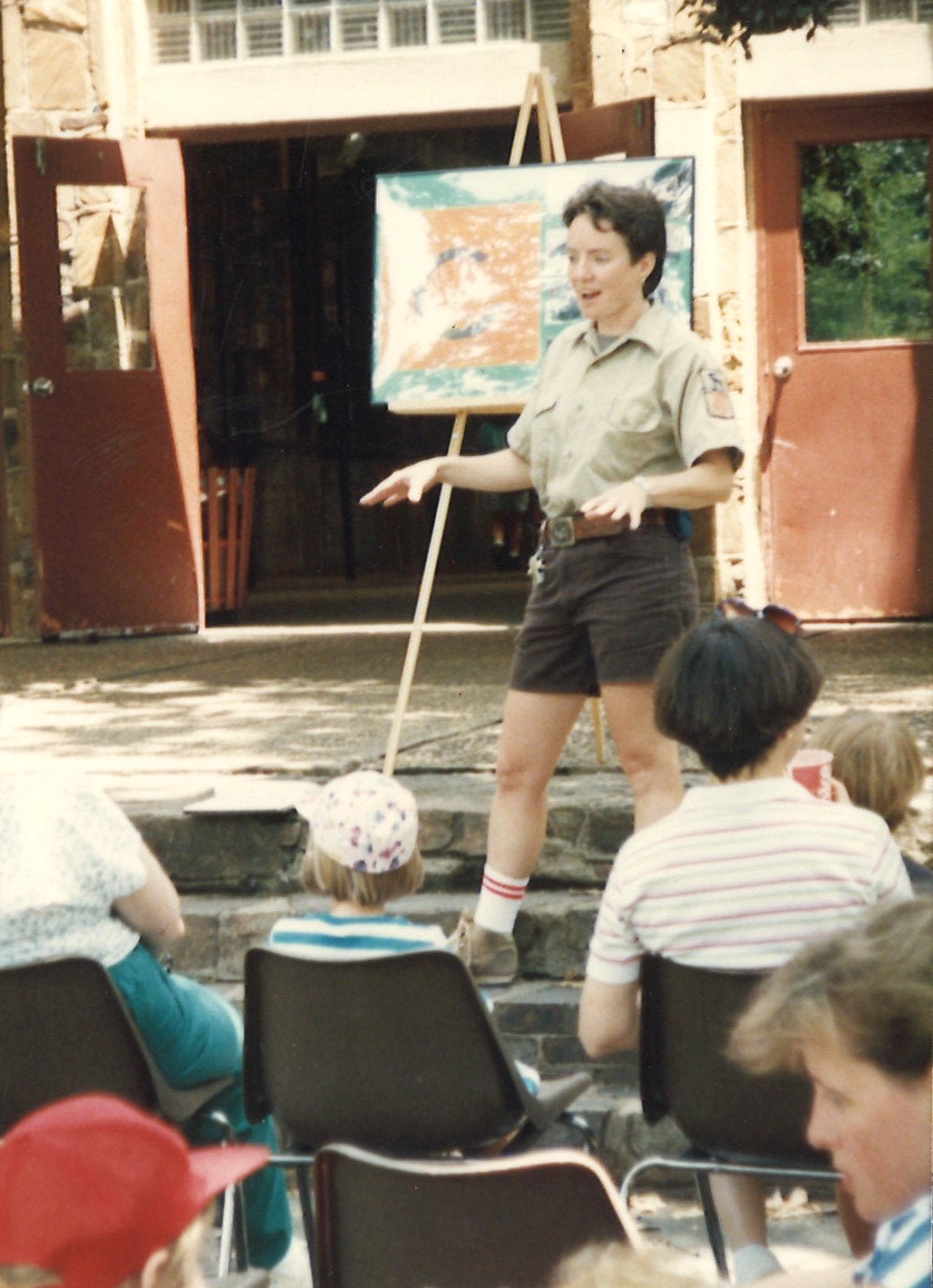
Debbie presenting a keeper chat in 1994.
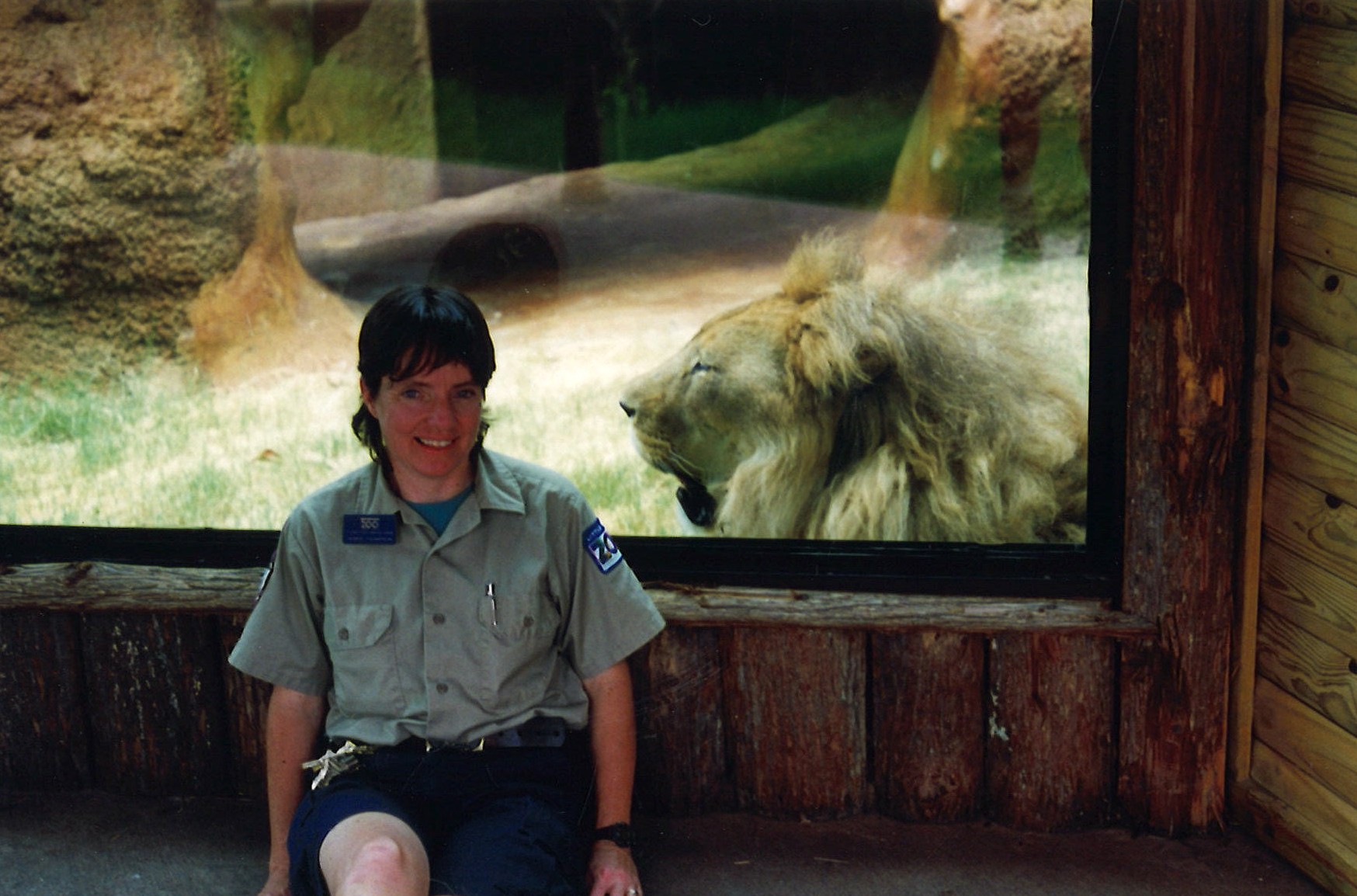
Debbie with K.C. the lion in the Zoo’s newly constructed lion habitat in 1996.
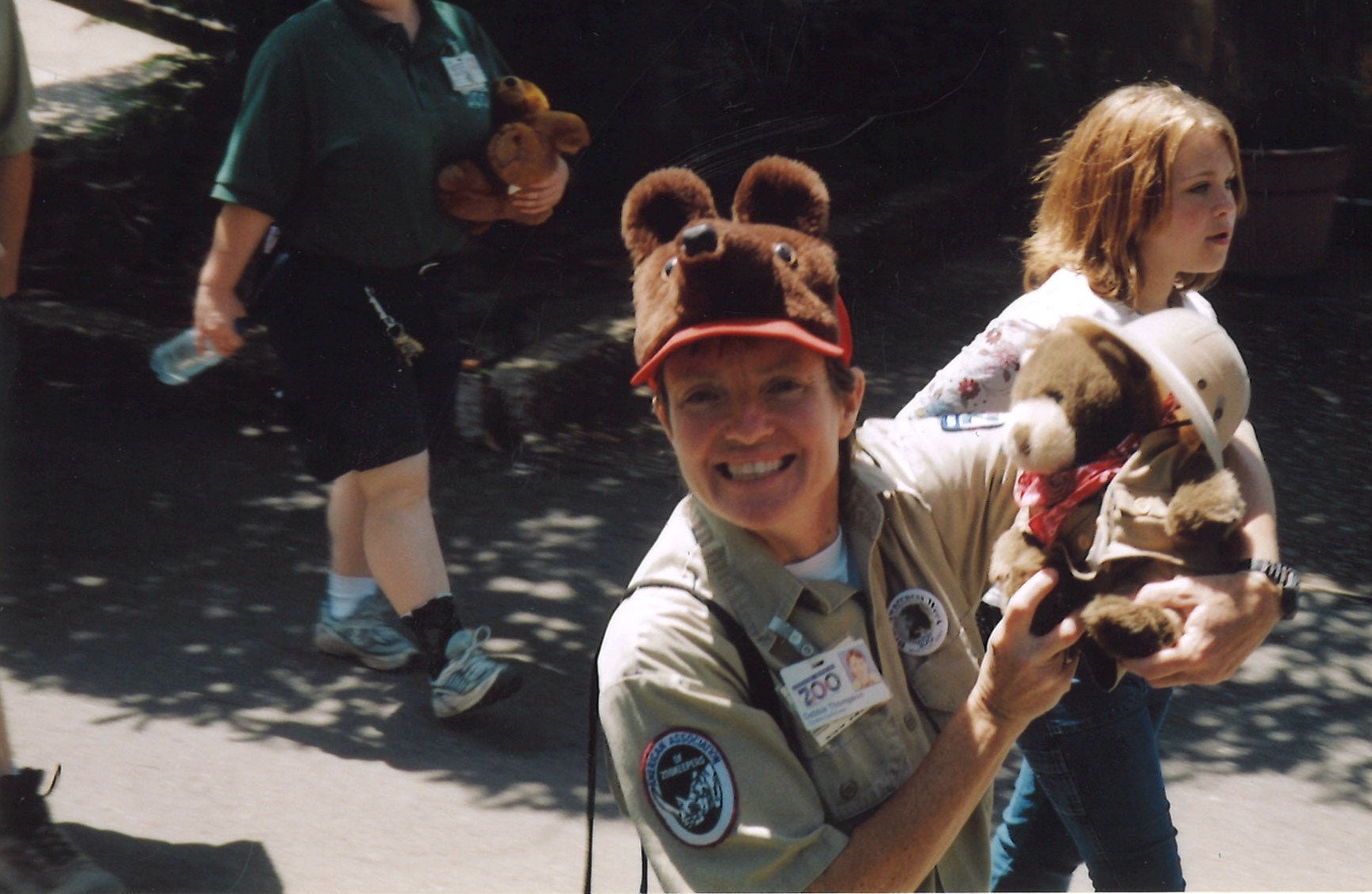
Debbie proudly showing off her teddy bear during a bear awareness parade.
The promotion came with something relatively novel for Debbie at the time: an office—and then, a computer.
Her responsibilities were changing, too.
As curator, Debbie became more involved in the larger picture of animal management. She worked closely with veterinary staff, helped coordinate animal exams and diet changes, communicated with other zoos, arranged animal transfers and represented the Little Rock Zoo through Species Survival Plans.
Her involvement with the Association of Zoos and Aquariums (AZA) continued to grow from there.
In 2001, Debbie became the studbook keeper for the ringtail (Bassariscus astutus), a small carnivore native to North America. And despite the name, we’re not talking about ring-tailed lemurs!
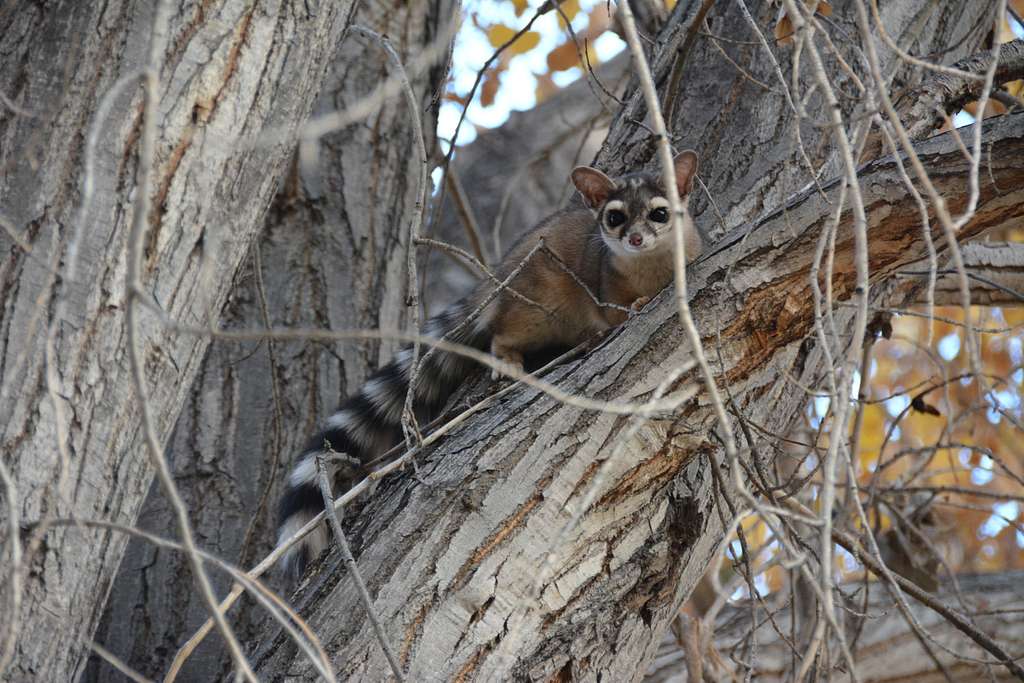
Wild ringtail. Photo courtesy of National Parks Gallery.
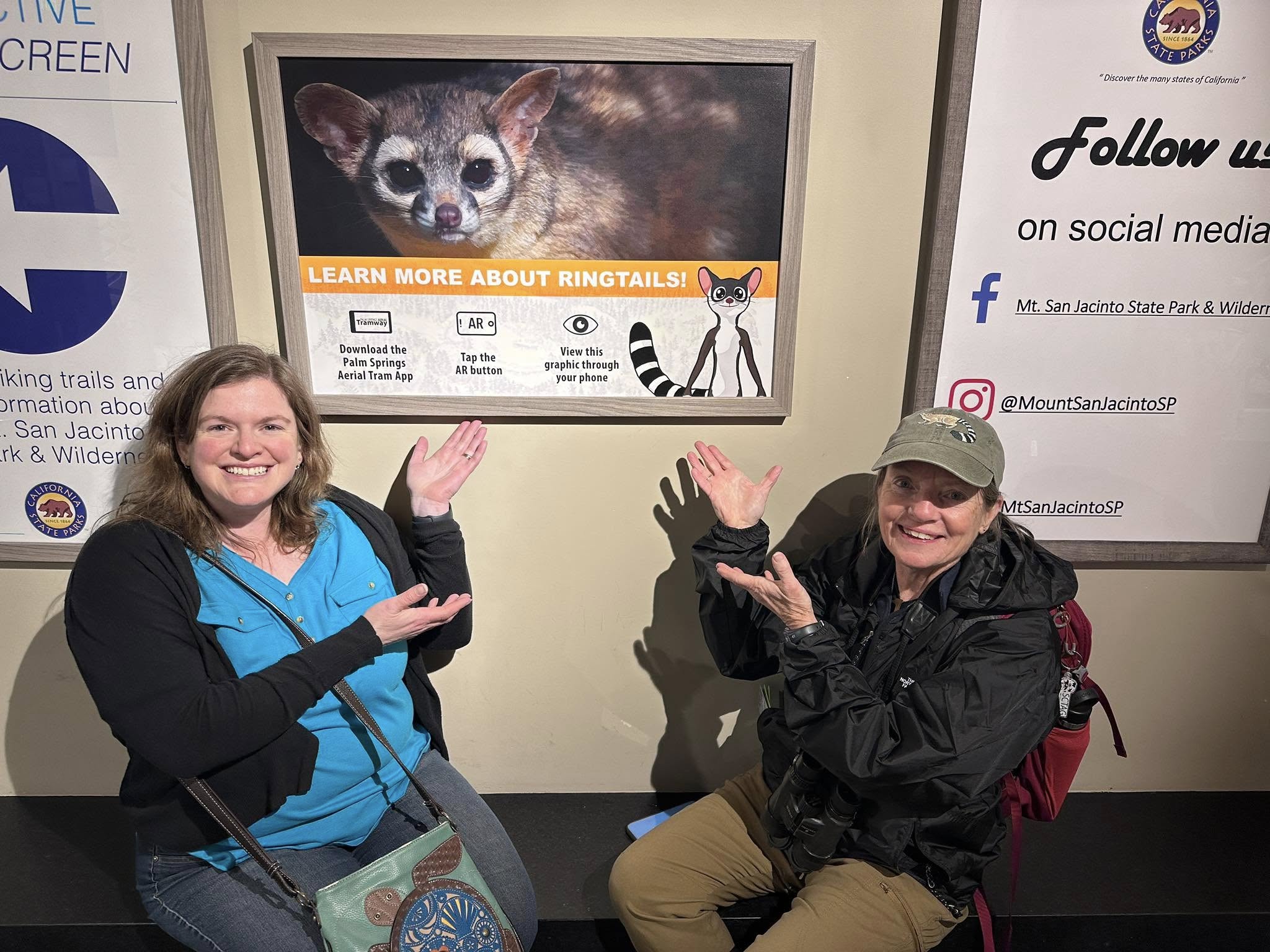
Debbie and Ringtail SSP Vice Coordinator Katie Govern posing with a ringtail sign in California.
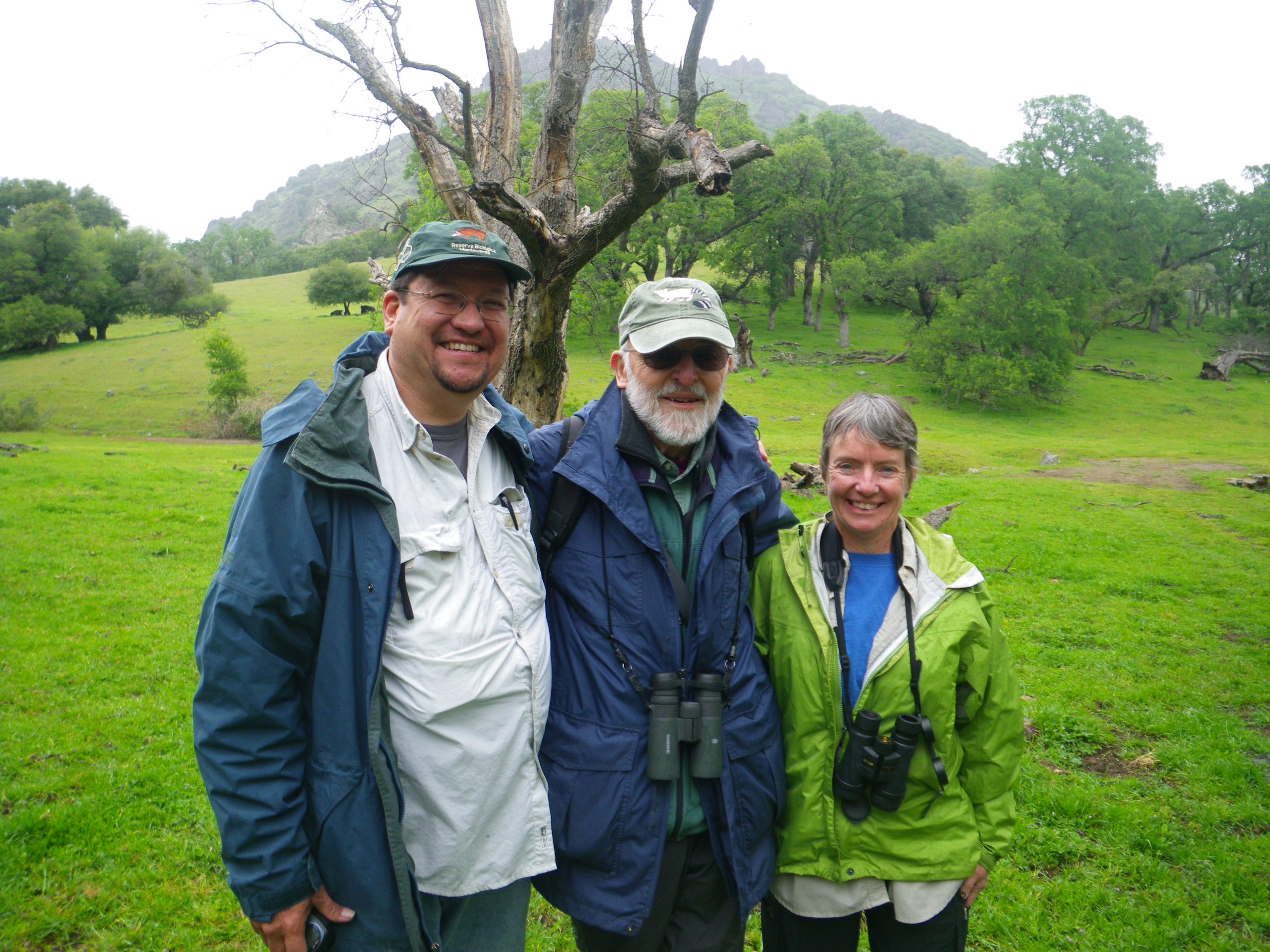
Debbie with ringtail researchers David Wyatt and Gene Trapp in 2017.
That distinction has caused some confusion over the years—even among Zoo staff.
Back when fax machines were still a regular part of Zoo communication, Debbie would receive documents with “ringtail” in the subject line. Staff would occasionally see the word, assume the paperwork belonged to the primate team and deliver it there instead. Debbie’s name on the page sometimes seemed like the mistake—not the destination!
But these were indeed Debbie’s ringtails.
Her work with the species would become a significant part of her career. She went on to serve as the ringtail program manager, publish the studbook multiple times and help manage the species across AZA institutions for decades.
Her AZA involvement continued to expand beyond ringtails. Debbie joined the Bear Taxon Advisory Group Steering Committee in 2003 and eventually served as its chair from 2011–2015. She has also served multiple terms as coordinator of the Sloth Bear Species Survival Plan.
Her career had grown from caring for individual animals at the Little Rock Zoo to helping make decisions that support species across an entire network of accredited zoos.
But Debbie has never completely traded the Zoo grounds for an office.
“I still do my best to get out into the Zoo to talk to guests, observe animals or help out as needed,” she said.
She especially enjoys watching animal training—including seeing an animal voluntarily participate in an injection or blood draw.
Those moments are a reminder of just how much the profession has changed since 1982.
Watching a Zoo—and a Profession—Change
When Debbie started at the Little Rock Zoo, there were just sixteen animal keepers, three senior keepers and one general curator.
Veterinary care looked very different, too. A veterinarian came to the Zoo for half a day each week unless an emergency required additional help.
Today, the Zoo has grown to more than forty animal keeper positions, along with three senior keepers, three area curators, a general curator, two full-time veterinarians and two licensed veterinary technicians.
Debbie has had a front-row seat to that transformation.
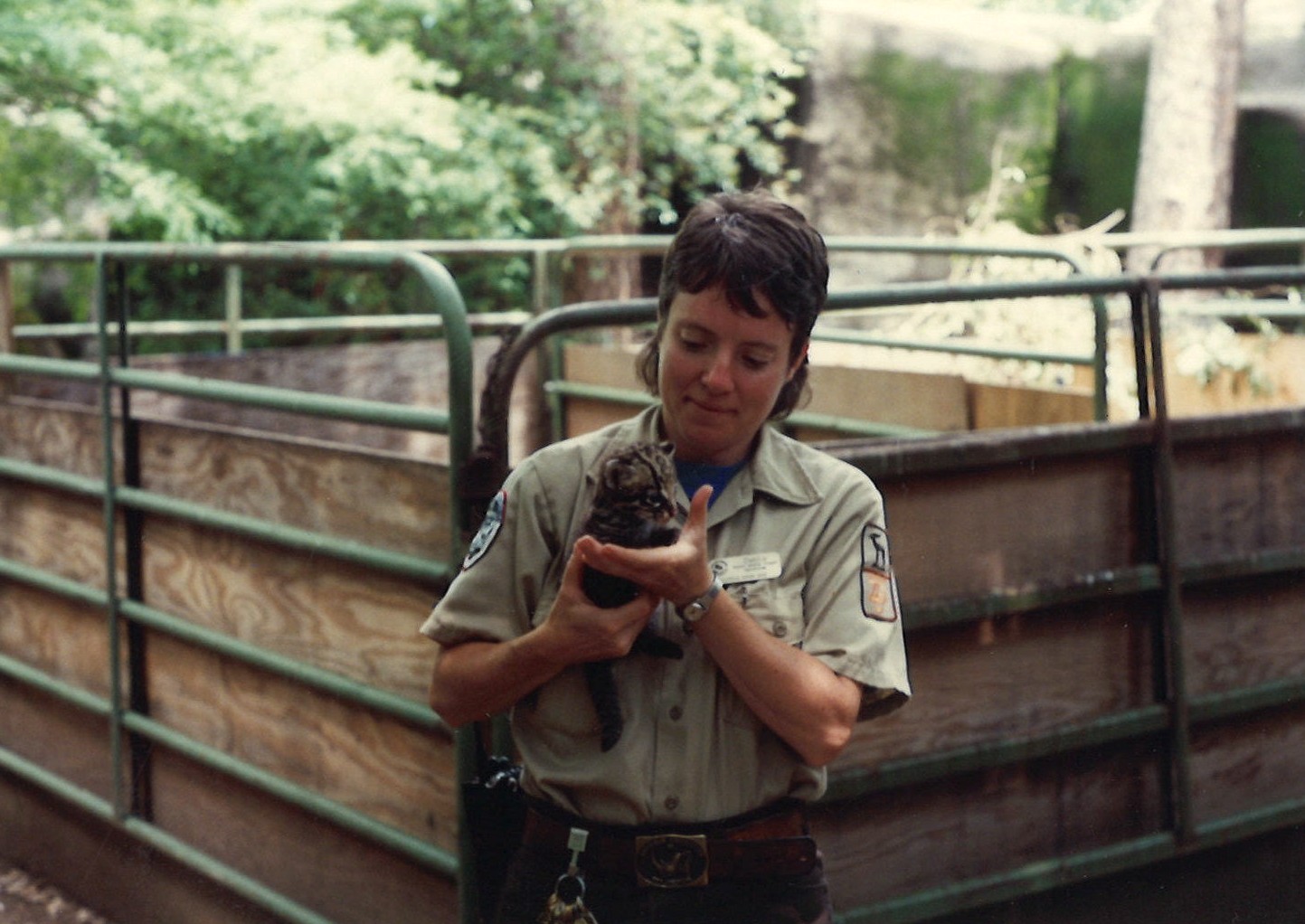
Debbie with an ocelot kitten in 1994.
She remembers the closing of the old lion house and helping coordinate moves for its large cats. She watched the Great Ape habitat transform the care of chimpanzees and orangutans while also allowing the Little Rock Zoo to welcome gorillas for the first time.
She saw cheetahs arrive in 2012, watched the Zoo build its first habitat with underwater viewing for penguins and helped bring ringtails to Little Rock in 2014.
That last milestone was particularly meaningful.
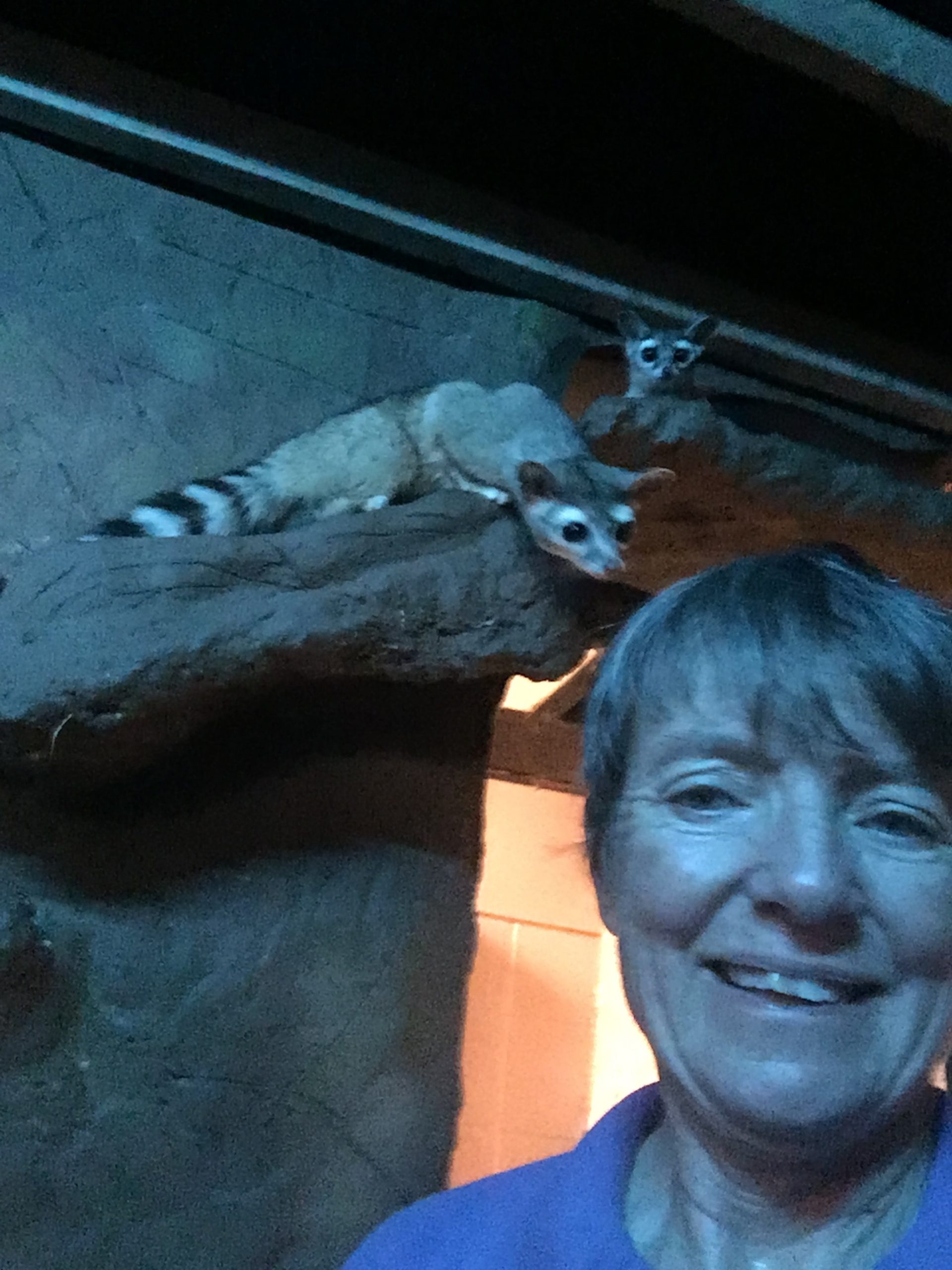
Debbie with ringtails Reba and Romulus.
Debbie had already spent years helping manage ringtails through AZA before she’d ever actually worked directly with the species.
When Reba and Romulus, the Zoo’s first ringtails, arrived, she finally had an opportunity to work firsthand with animals she had spent years studying and managing.
That experience, she says, made her a better species coordinator.
The profession surrounding those animals was evolving just as quickly.
From Paper Records to Global Collaboration
In 1982, animal records were written on small sheets of paper and later rewritten into permanent records. Keepers shared a single sheet for their daily notes.
There were no computers.
Long-distance phone calls cost money, which meant calling a colleague at another zoo for advice wasn’t something staff could casually do.
Today, zoo professionals can communicate with colleagues across the country—and around the world—almost instantly.
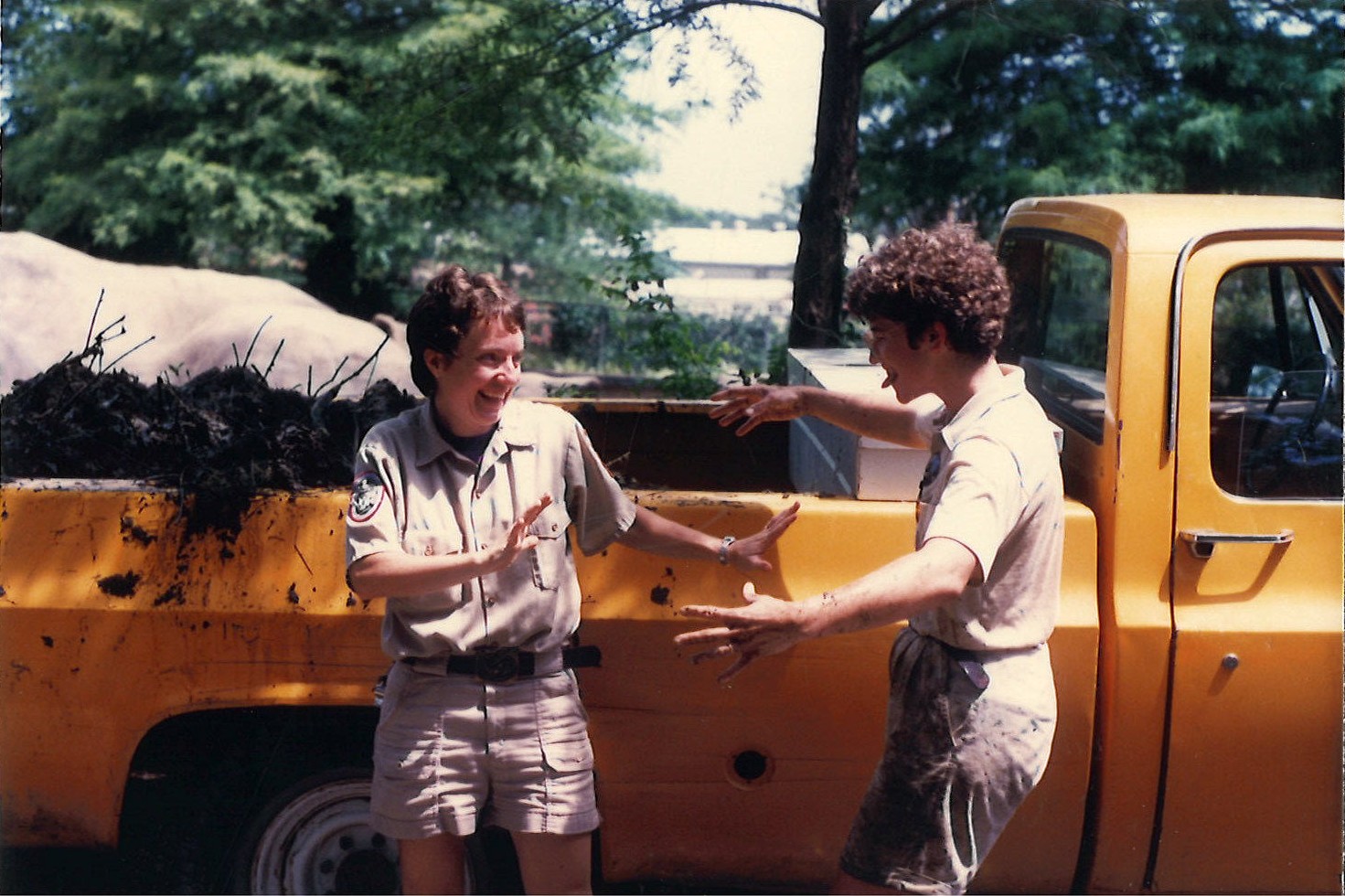
Debbie with a fellow Zoo staff member in 1988.
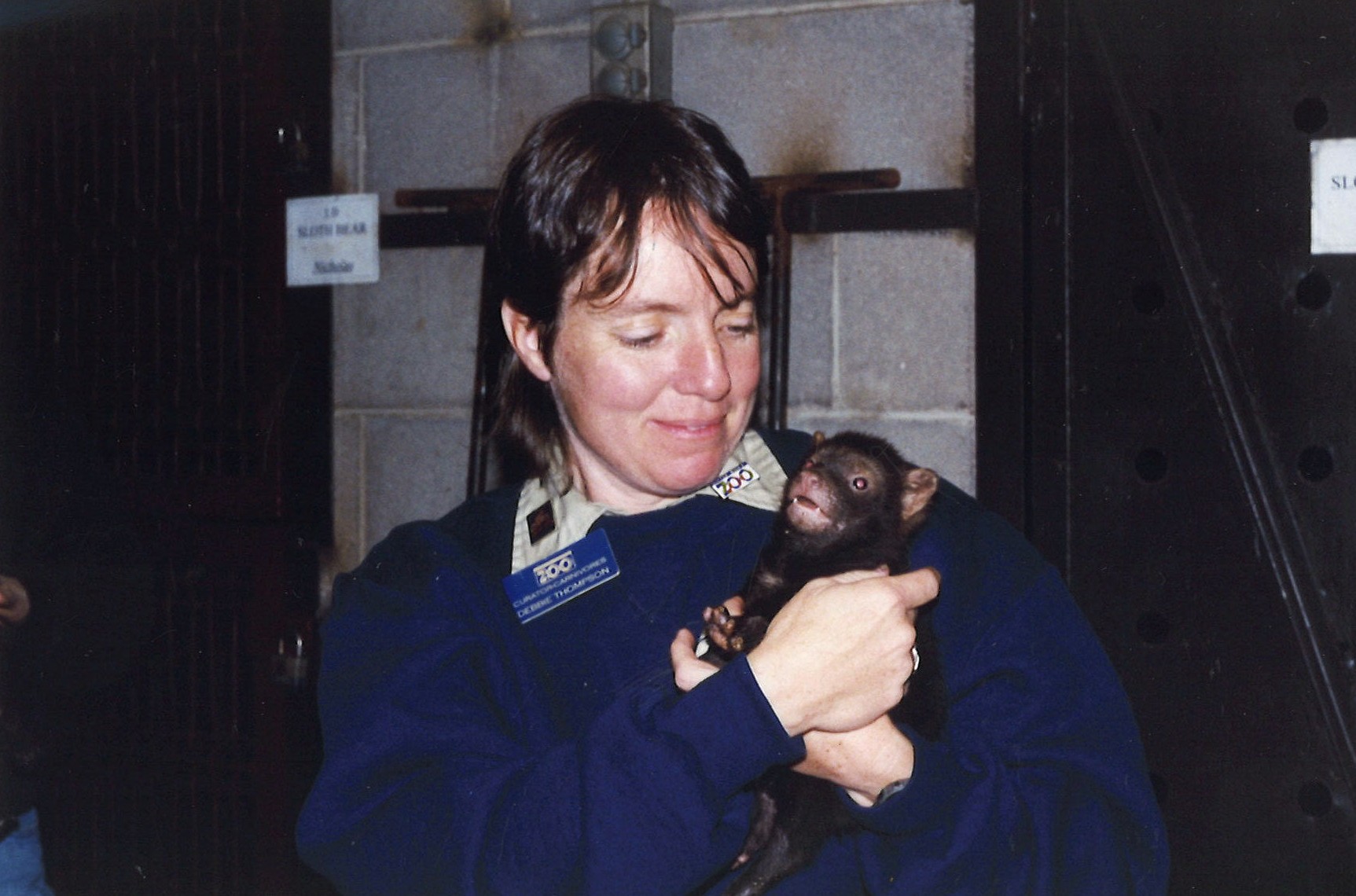
Debbie holding a bush dog pup.
Animal training has changed dramatically as well.
Keepers have long trained animals for tasks such as shifting between spaces and entering transport crates, but voluntary medical behaviors such as injections and blood draws were not routine when Debbie began. Animals often had to be sedated for procedures that, with today’s training techniques, some can voluntarily participate in.
Even enrichment has evolved.
Debbie remembers enrichment happening early in her career, but today it is formally planned, documented and incorporated consistently into animal care.
Conservation has undergone an equally dramatic transformation.
The Little Rock Zoo once had a single Education employee and far fewer opportunities to directly participate in field conservation. Today, Zoo staff have contributed to conservation work involving penguins in Africa, cheetahs in Namibia, and sloth bears in India.
For Debbie, sloth bears are perhaps the clearest example of just how far that work can reach.
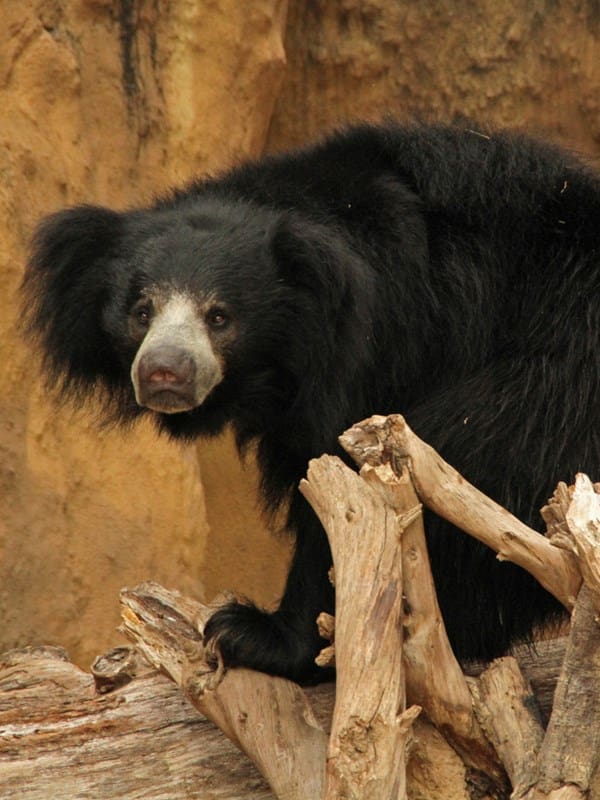
Sloth bear at the Little Rock Zoo.
The Bears That Changed Everything
Before moving to Little Rock, Debbie had never seen—or even heard of—a sloth bear.
They didn’t stay unfamiliar for long.
“I think I fell in love the first time one blew a mouthful of chewed-up dog chow at me,” Debbie joked.
Or, she admits, perhaps it was when one barked unexpectedly and startled her enough that she hit her head on a low doorway.
Just three months after Debbie arrived in Little Rock, a sloth bear named Gnatalie was born—the first of many sloth bear births Debbie would experience during her career.
Working with the species sparked her interest in becoming more involved with AZA’s Bear Taxon Advisory Group and ultimately led to her role as coordinator of the Sloth Bear Species Survival Plan.
Her involvement has continued to grow beyond managing the AZA zoo population. Debbie also serves on the SAFE Sloth Bear Steering Committee, helping support a collaborative conservation program that brings together zoos, researchers and conservation partners working to protect sloth bears in the wild.
It also eventually took her somewhere she never could have imagined when she first packed her car for Little Rock.
India.
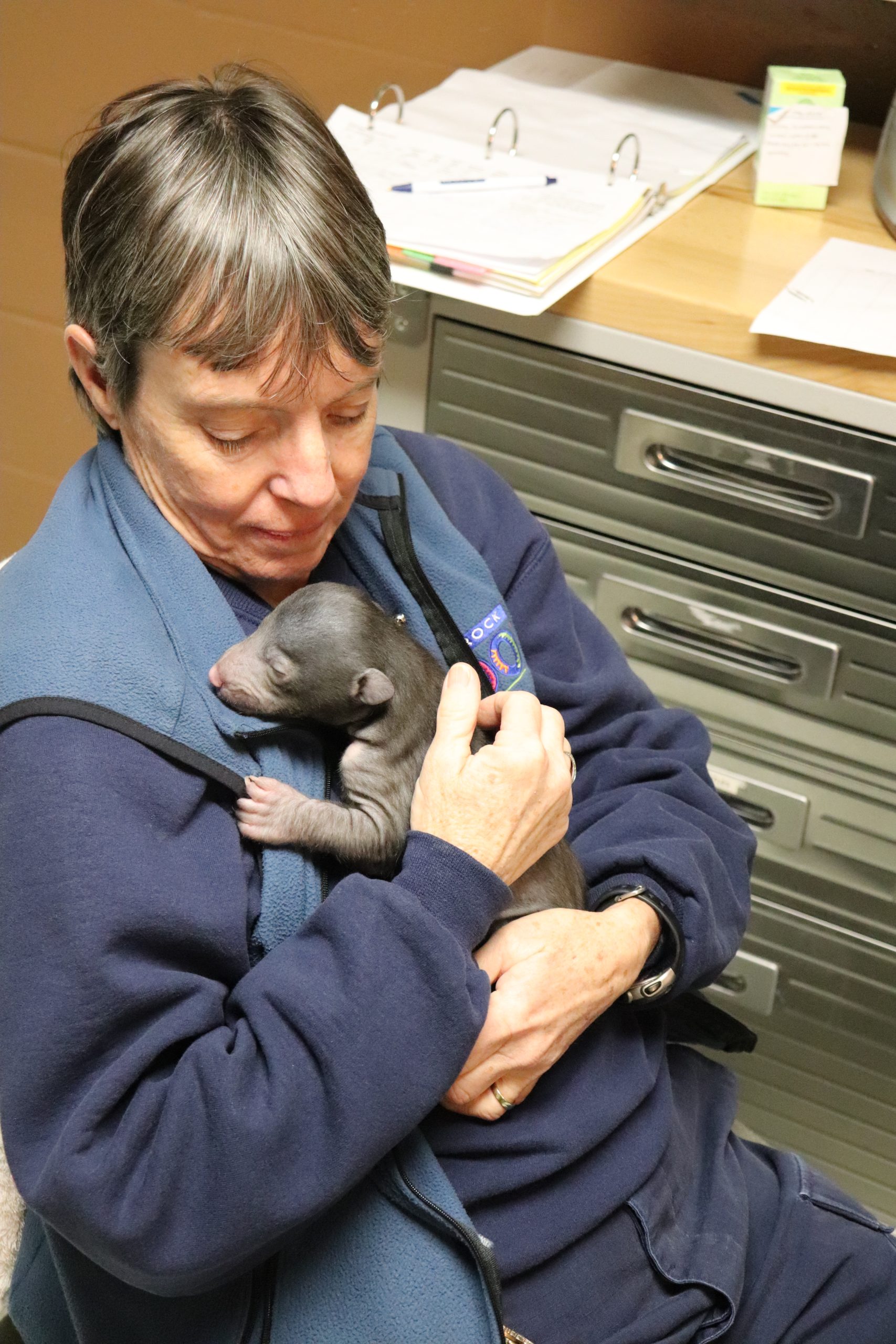
Debbie holding a young sloth bear cub in 2018.
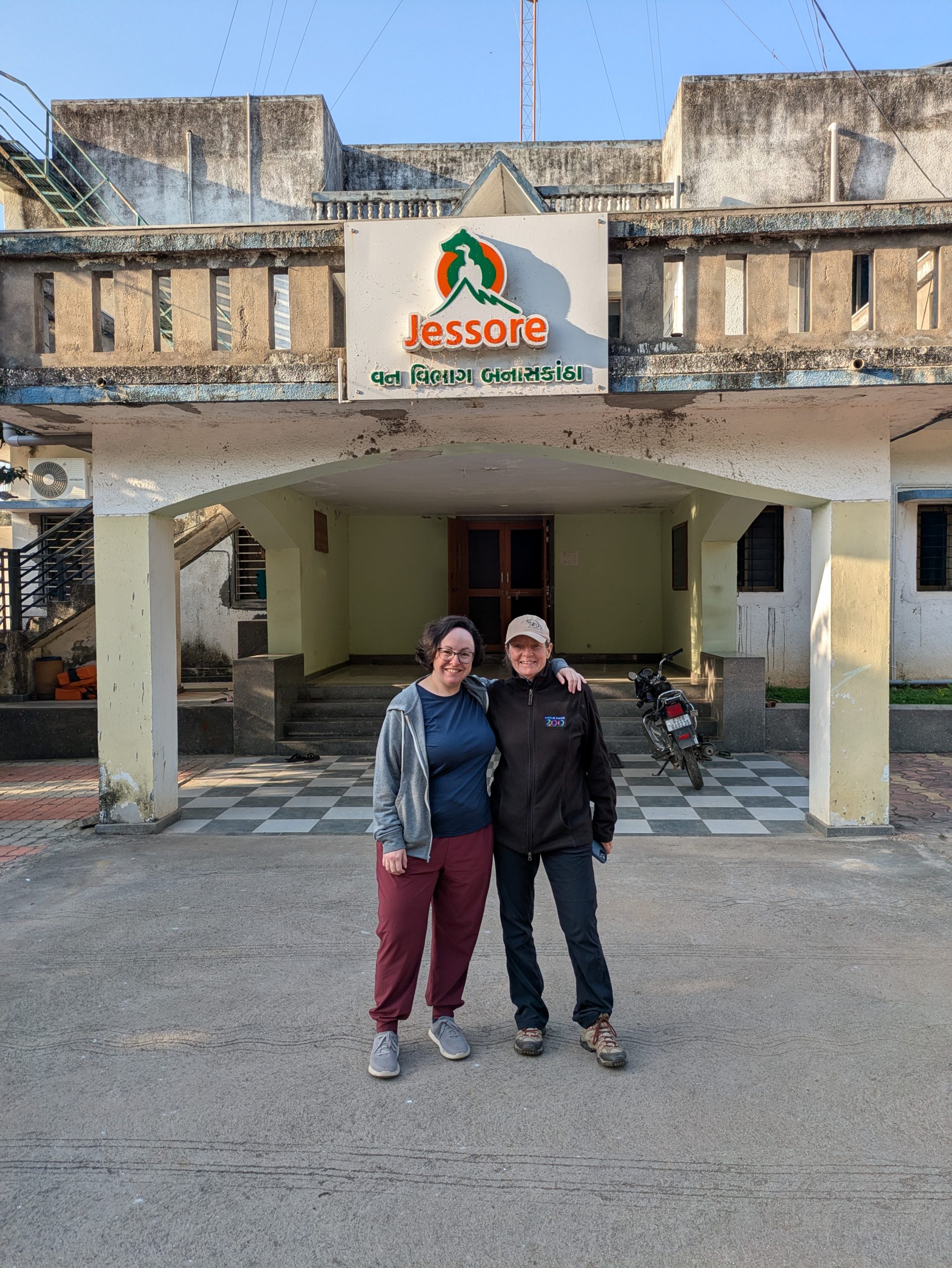
Debbie and Dr. Laura visiting the Jessore Sloth Bear Sanctuary in India.
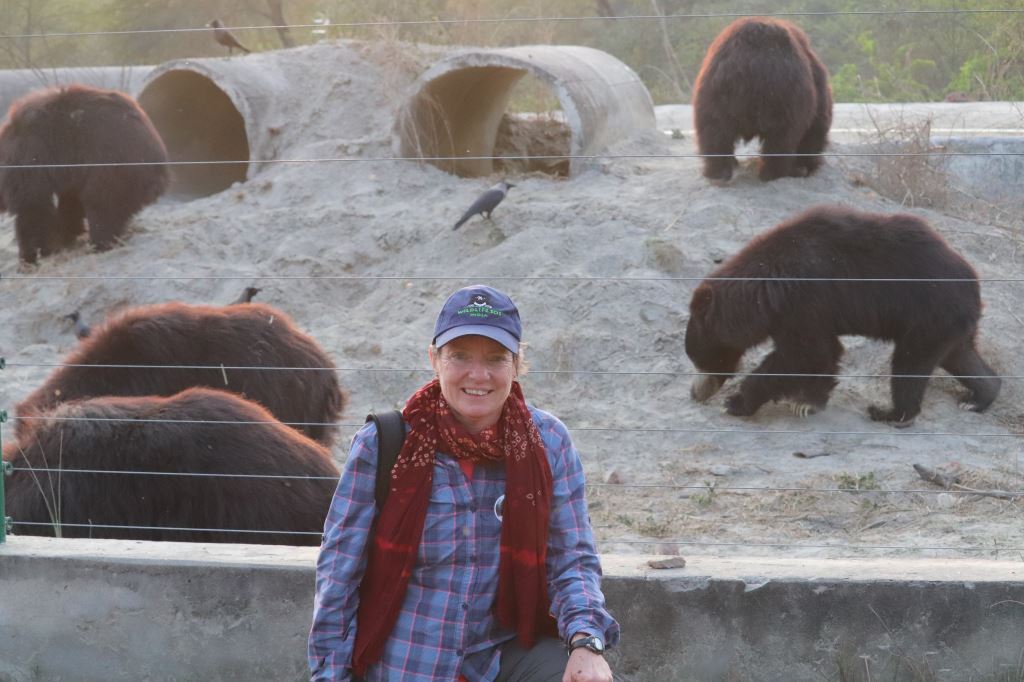
Debbie with sloth bears in India.
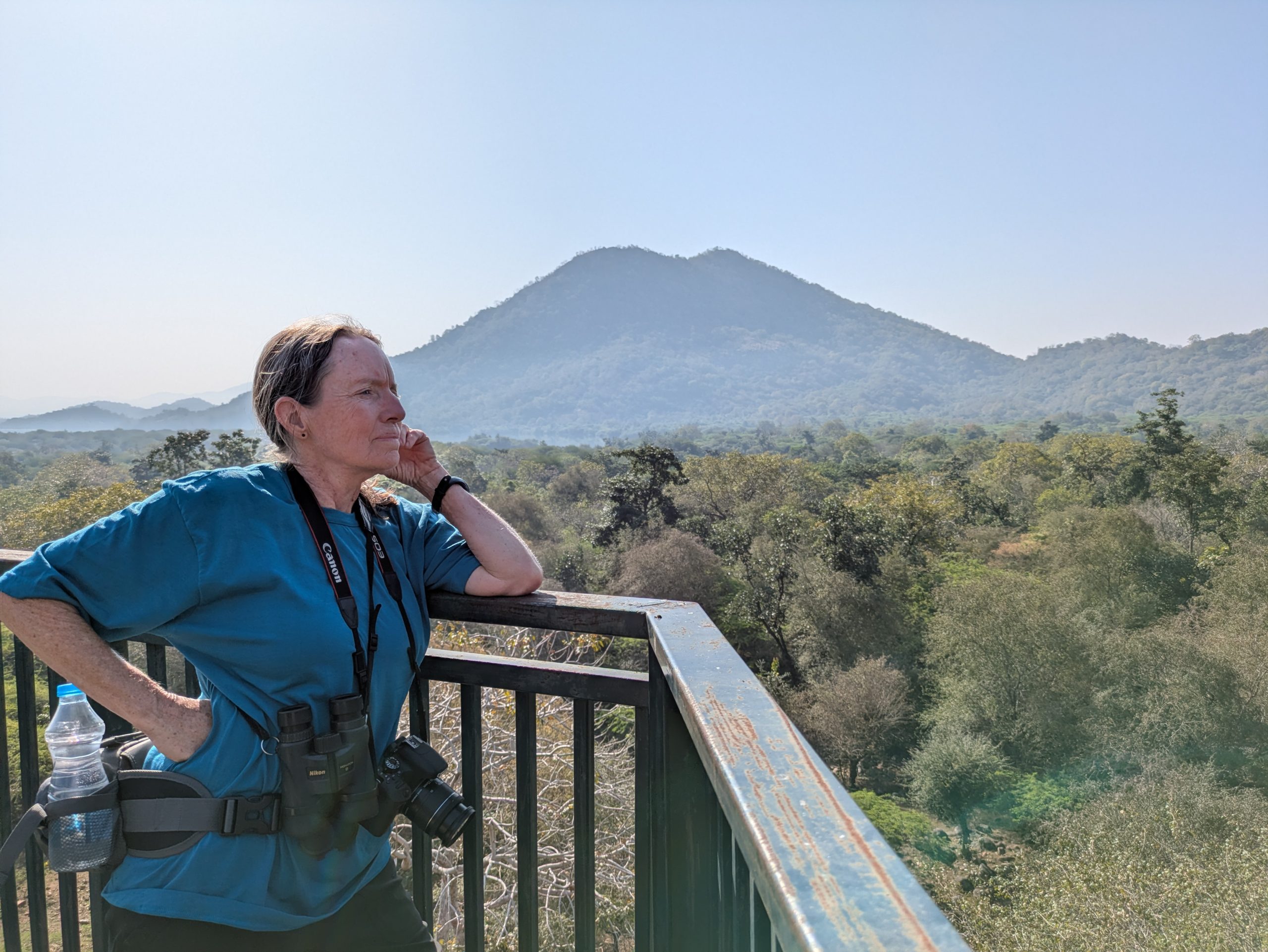
Debbie observing wildlife in India.
Since the Little Rock Zoo’s first conservation trip to India in 2018, its involvement in sloth bear conservation has continued to grow. SAFE Sloth Bear was established in 2022, creating even more opportunities to connect the expertise and resources of zoos with conservation work in the field.
For Debbie, one particular experience captures just how extraordinary that journey has been.
“I never thought I would find myself sitting after dark in the Indian countryside with two of the top sloth bear biologists in the world waiting on a wild sloth bear to make an appearance,” she said.
But she did.
And it happened because a career that began with cleaning habitats and caring for carnivores in Little Rock continued expanding into something much bigger.
Animals You Never Forget
More than four decades in animal care leaves you with a lot of stories.
Ask Debbie to name the animals who have been special to her and narrowing the list quickly becomes impossible.
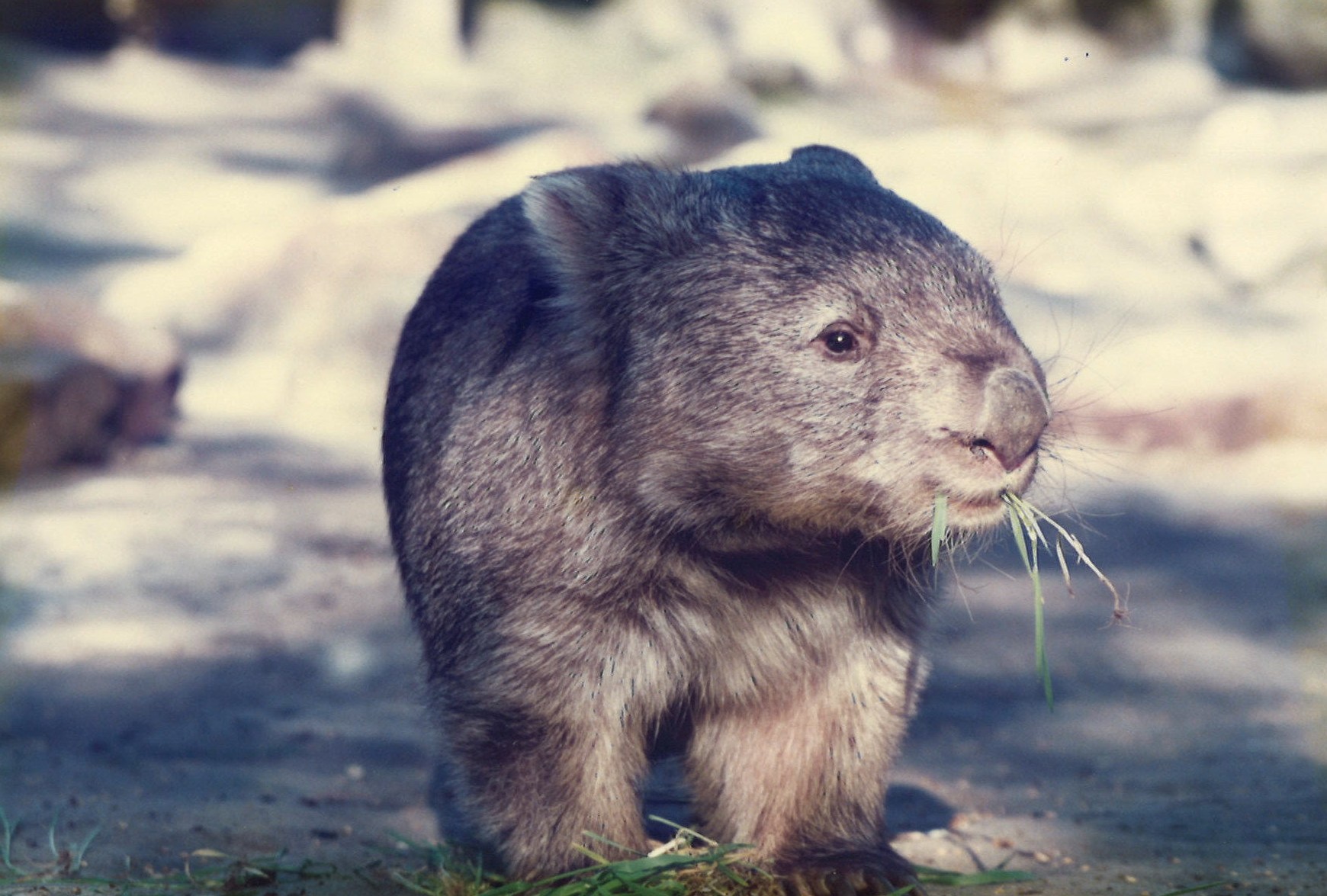
Wally the Wombat
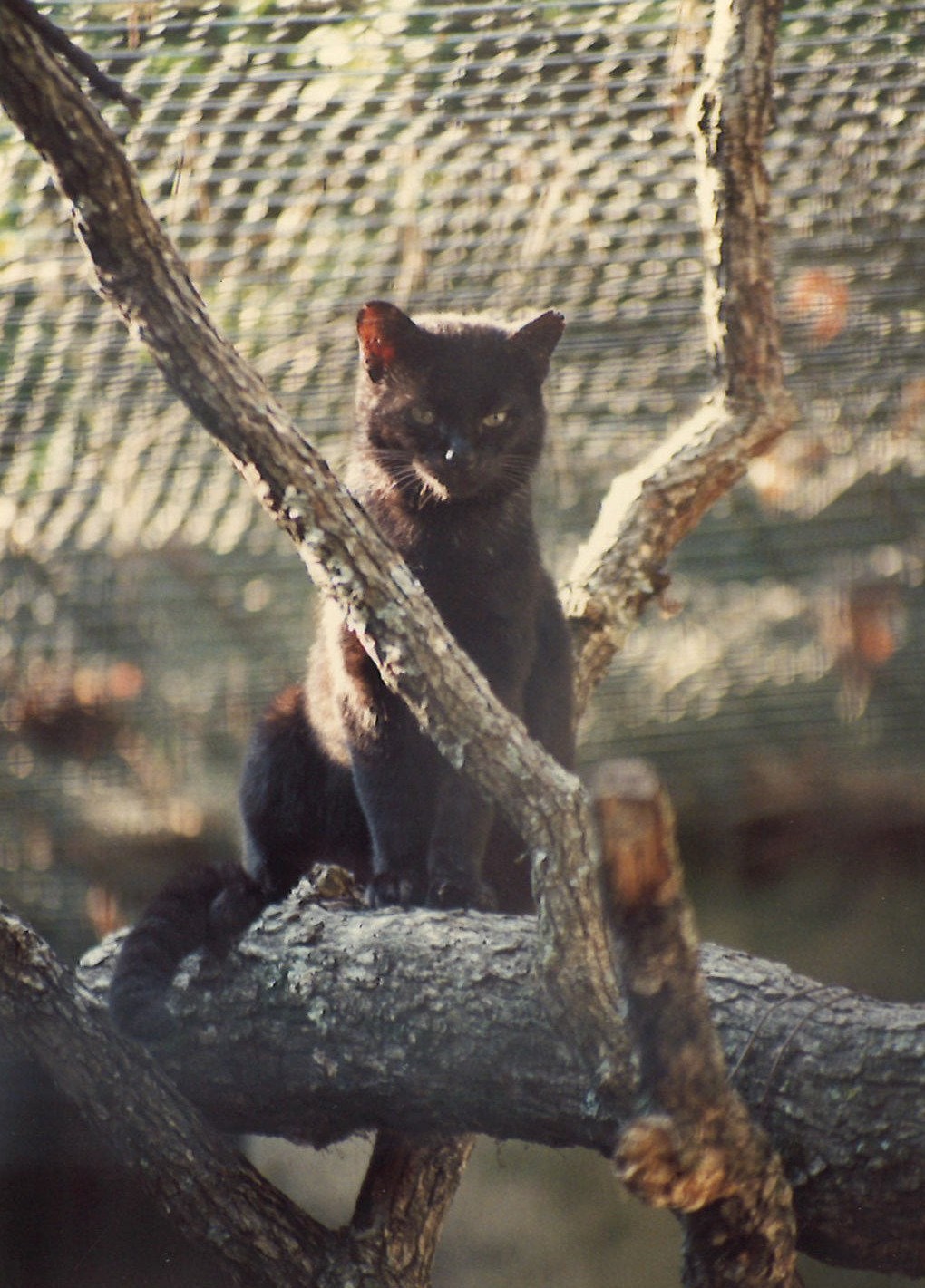
Maurice the Black Geoffroy’s Cat
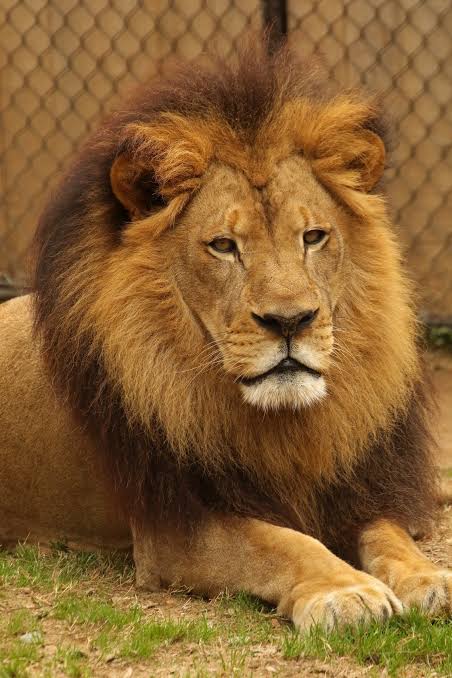
Bakari the Lion
There was Wally, the only wombat ever housed at the Little Rock Zoo, who wasn’t shy about chasing keepers out when he decided cleaning time was over.
There was Maurice, a black Geoffroy’s cat who arrived at the Zoo believed to be male—until staff discovered otherwise. Maurice eventually developed mobility challenges as she aged, and staff created special accommodations that helped her live to 21.
There was Bakari, the lion who arrived as a two-year-old in 2006 and initially seemed hesitant to enter his habitat. Staff thought he was afraid of the glass viewing windows and tried everything from soaping the glass to covering it with paper.
Eventually, they discovered Bakari wasn’t afraid of the glass at all.
He simply wanted the female lions to come outside with him.
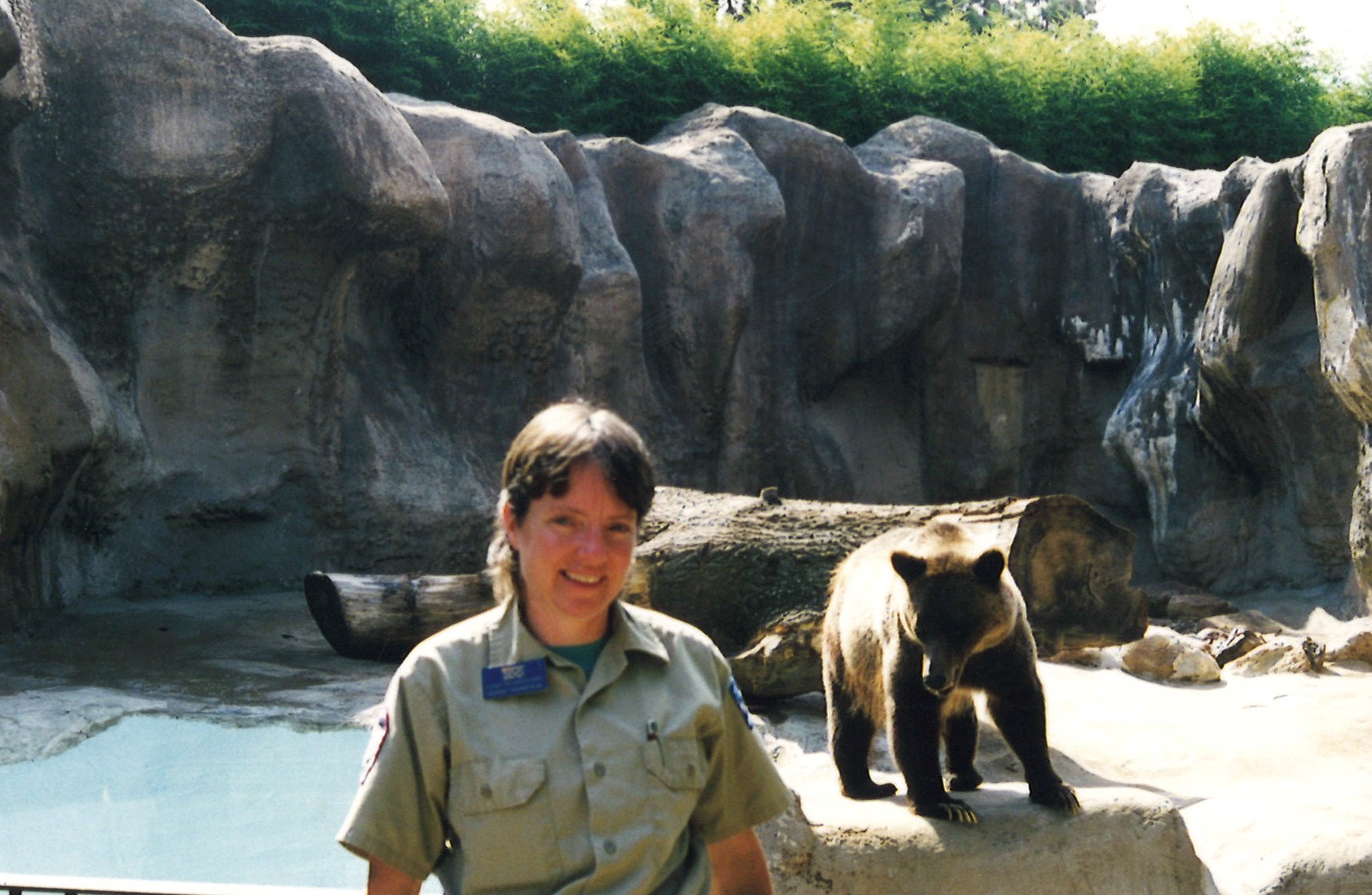
Debbie with one of the Zoo’s grizzly bears in the background.
And then there were grizzly bears Ann and Nona.
The sisters had been removed from the wild after learning to find food in campgrounds. Working with them taught Debbie an enormous amount about bear behavior—including the fact that sometimes the bears themselves are the best teachers.
Their first winter, Ann and Nona made it clear they weren’t particularly interested in eating or being disturbed. The following year, staff adjusted their care, helping them gain weight before winter and providing dark, comfortable dens where they could enter their seasonal torpor.
They also accidentally became guardians of one of Debbie’s most important possessions.
While preparing their bedding one winter, Debbie lost her wedding ring.
By the time she realized it, the bears had already settled into their dens.
Debbie assumed the ring was gone.
Five months later, after Ann and Nona emerged for spring, she searched through the lower layers of bedding.
There it was.
After more than four decades at a zoo, apparently even a wedding ring can have a wild story.
Accomplishments Built by a Team
Debbie’s career includes plenty of achievements that could fill a résumé.
She spent decades helping manage the AZA ringtail population and published its studbook multiple times.
She served in national leadership roles through AZA.
She was one of the authors of the first AZA Sun and Sloth Bear Animal Care Manual, a project that required years of research and collaboration with veterinarians, nutritionists and bear experts.
She has helped coordinate breeding, transfers and care for countless animals.
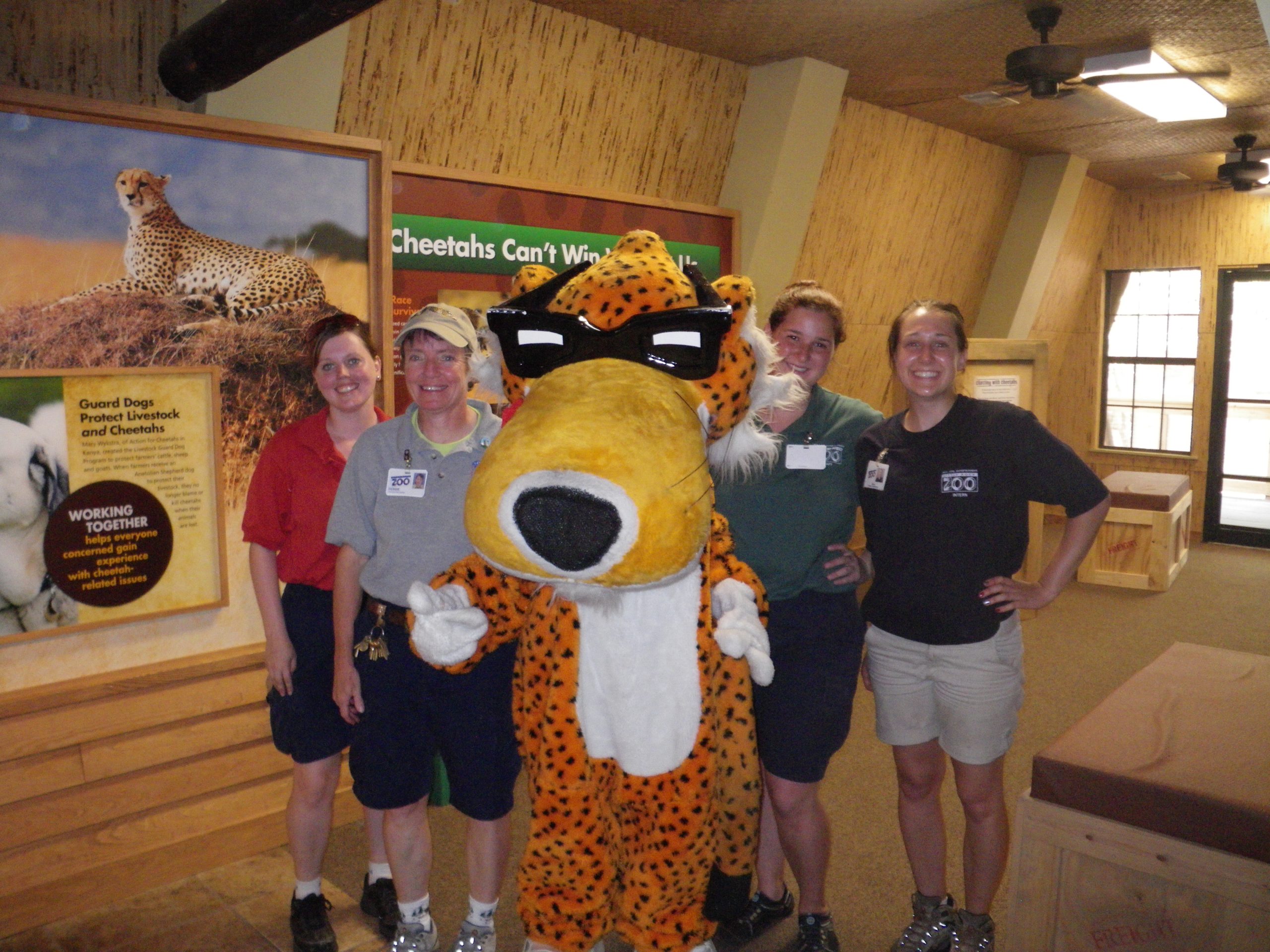
Debbie with her team and Chester the cheetah at the Zoo’s Cheetah Outpost.
But when Debbie talks about what makes her proud, she often comes back to the team.
A large carnivore voluntarily entering a transport crate with minimal stress.
An animal participating in a voluntary blood draw or injection.
A successful birth.
A keeper mastering a new skill.
Those are the wins she celebrates.
And when asked what she finds most rewarding about mentoring others, Debbie’s answer might sound surprising:
“I love when I am not needed.”
To Debbie, that means she’s done her job.
It means the people around her have the knowledge and confidence to handle everything from routine animal care to transfers and medical procedures themselves.
She particularly enjoys when members of her team teach her something new.
It means they’re continuing to learn, seek out new information and improve their craft.
And when colleagues at other zoos compliment something Little Rock has accomplished, Debbie is often happiest when she can say:
That wasn’t me.
My team did that.
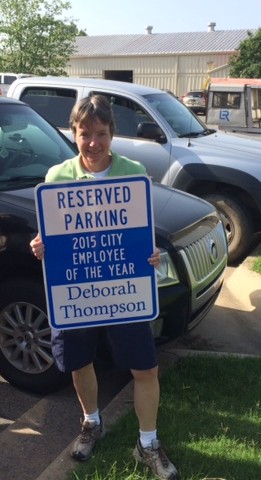
Debbie showing off her Employee of the Year parking plaque in 2015.
More Than a Job
Debbie still describes working at the Zoo as a privilege.
More than 40 years after arriving in Little Rock, no two days are quite the same.
One day might mean watching bush dog puppies venture onto exhibit for the first time. Another could involve coordinating an animal transfer, attending meetings, solving a maintenance issue or joining volunteers to clean up around the Zoo.
And while the Little Rock Zoo has changed enormously since 1982, Debbie says something important has remained.
It still feels like family.
Staff jump in when someone needs help. They share their knowledge with guests. They work together to make sure someone gets to see the special animal they came to visit.
For Debbie, that’s part of what makes the Little Rock Zoo special.
She hopes guests leave knowing that the animals are receiving excellent care—but also thinking about something beyond the Zoo’s gates.
“I hope they leave and think about the importance of conservation and taking care of our environment,” she said.
“The future of our planet depends upon people caring and making change to ensure that future generations have all of this amazing wildlife and wild places to enjoy.”
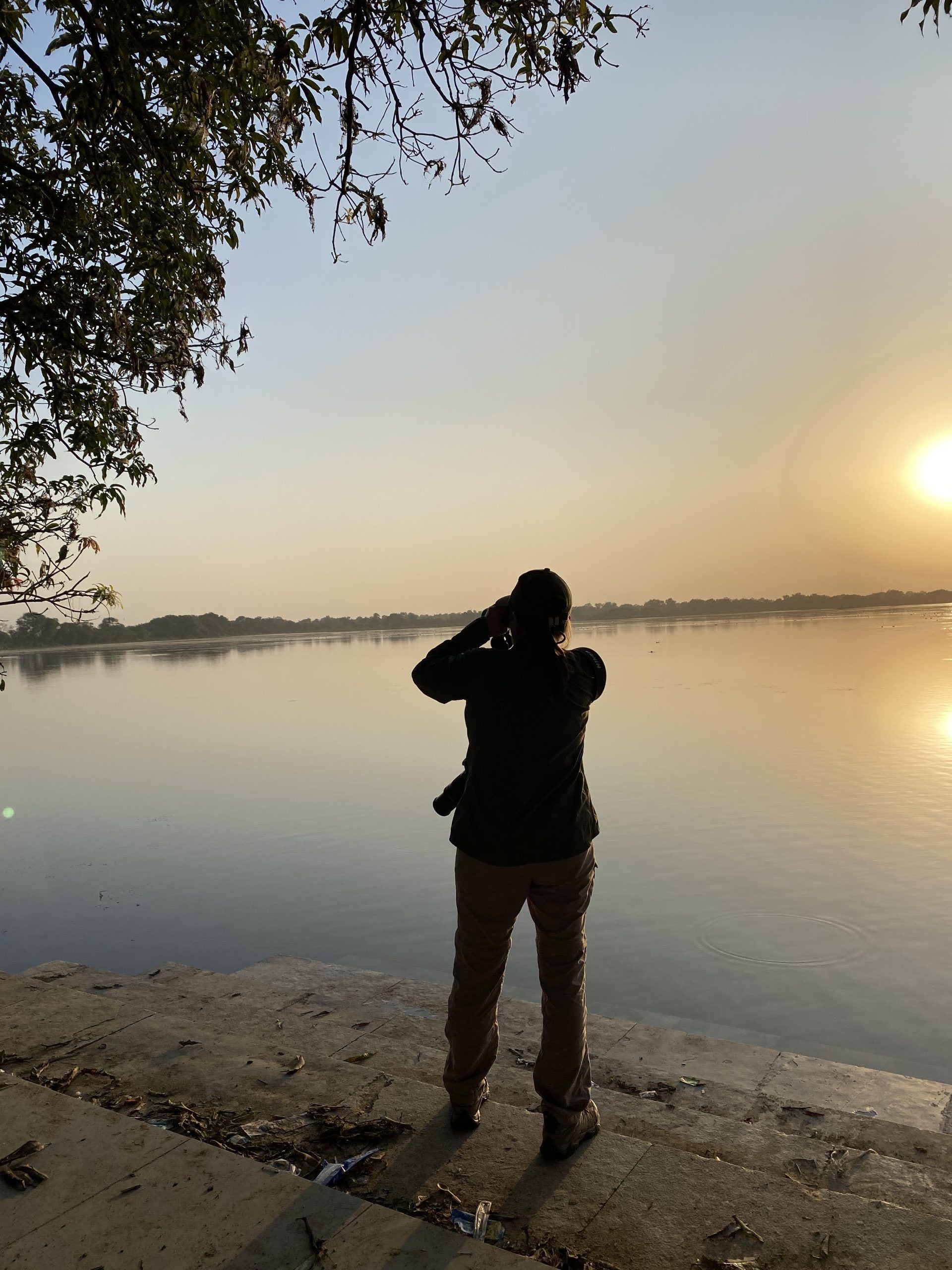
Debbie observing wildlife in India.
A Career That Keeps Growing
It’s difficult to summarize more than four decades at the Little Rock Zoo.
Debbie has watched animal care transform, helped the Zoo welcome species that had never lived here before, contributed to national programs, written animal care guidance used by other professionals, mentored generations of staff and followed her passion for bears all the way to the Indian countryside.
But perhaps what’s most remarkable is that she still looks forward to what comes next.
“I consider working at the Zoo a privilege that not everyone gets,” Debbie said. “Every day is different.”
From cleaning habitats to international conservation, Debbie is grateful for the opportunities the Little Rock Zoo has given her.
And after more than 40 years, there are still new animals to meet, new things to learn and another day at the Zoo waiting tomorrow.
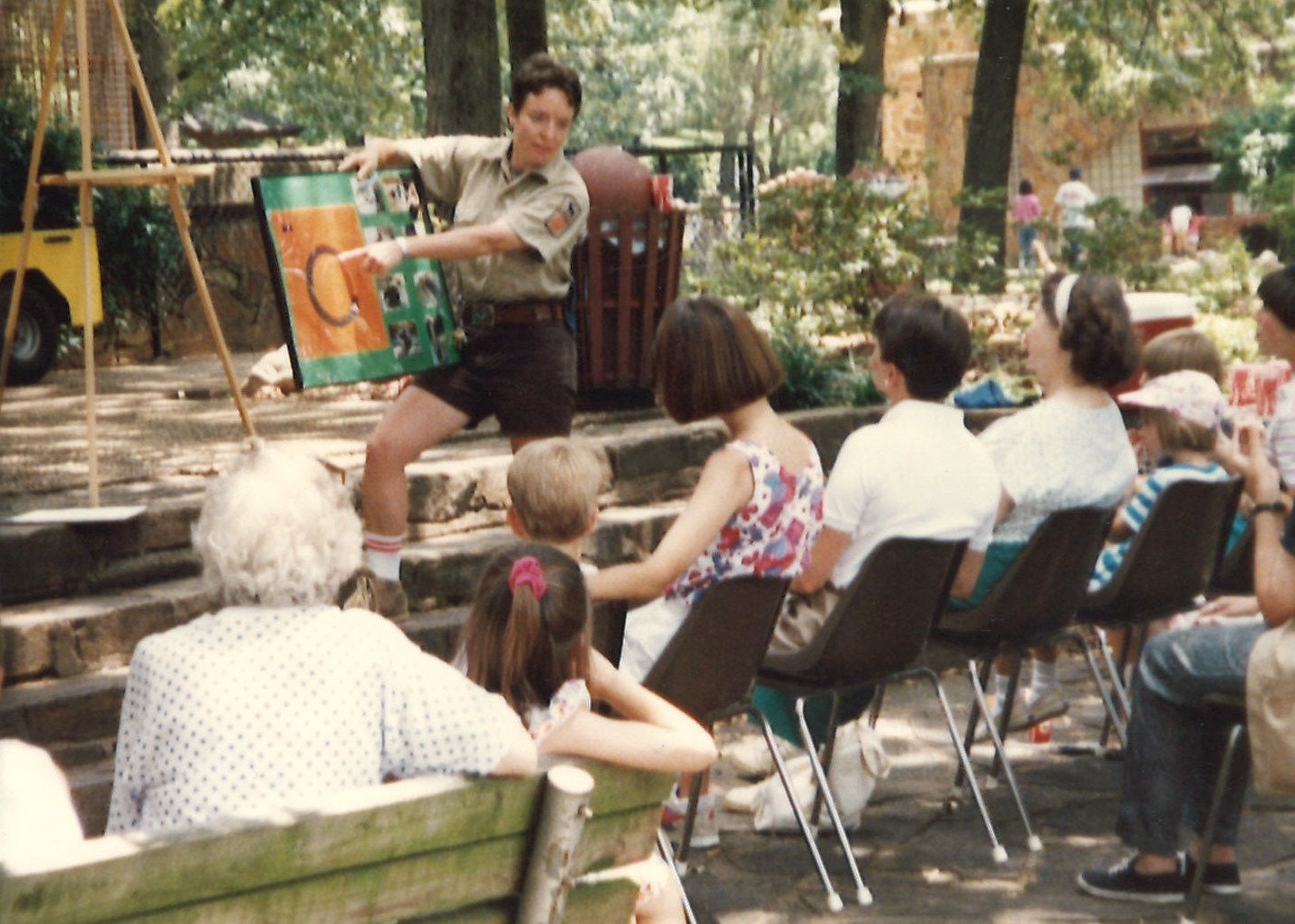
Debbie presenting a keeper chat in 1994.
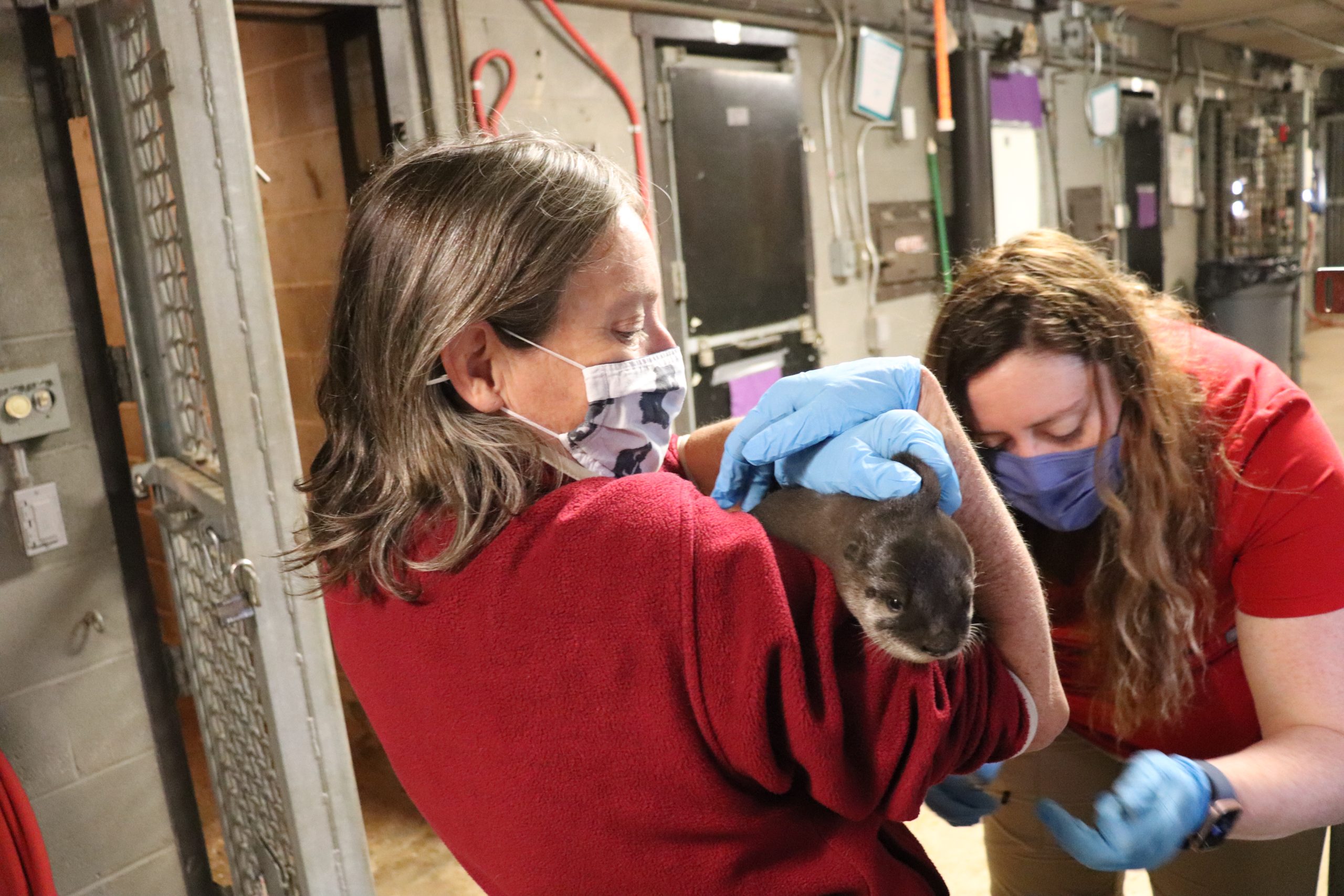
Debbie assisting with a veterinary examination.
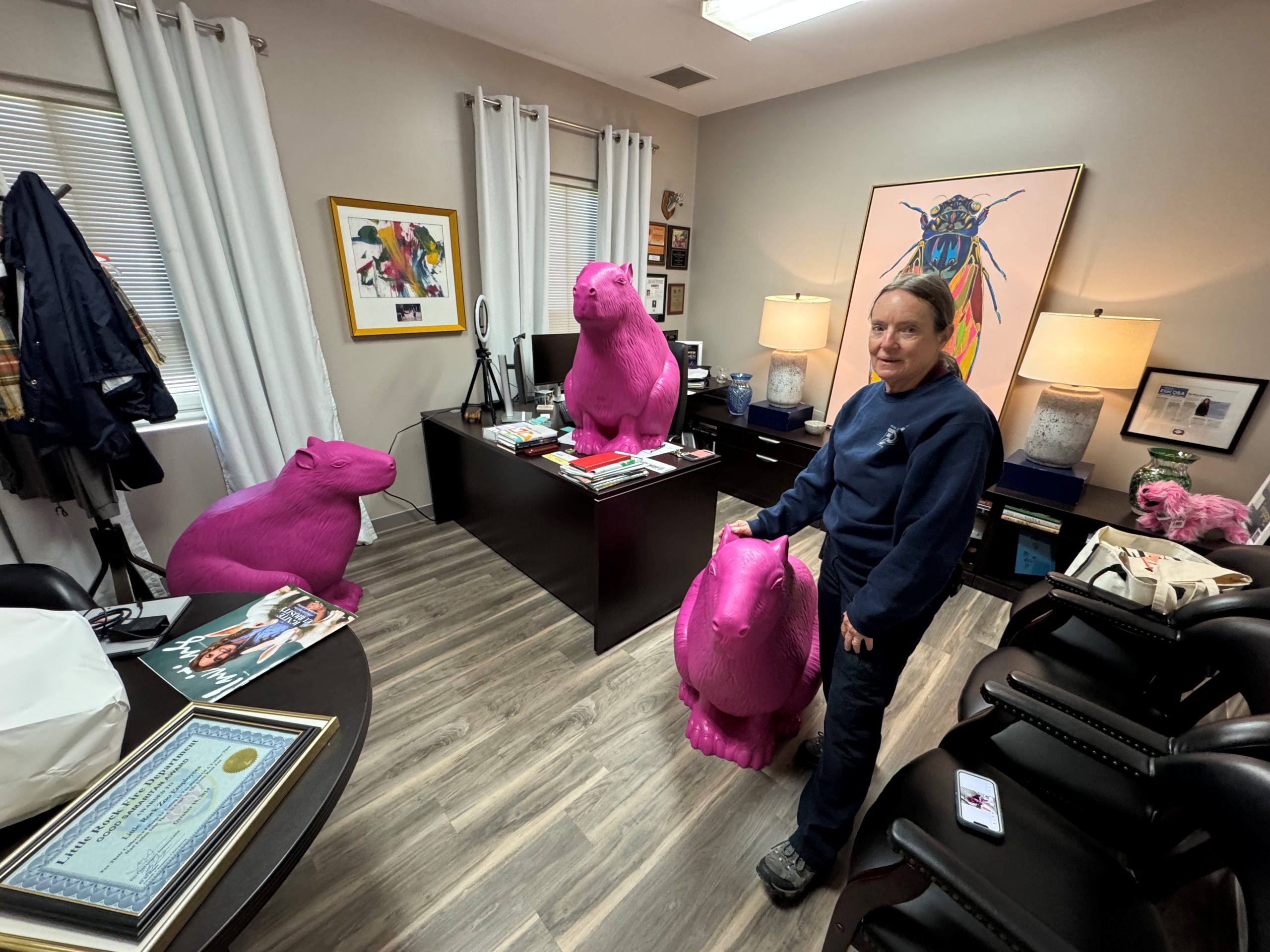
Debbie posing with some of the Zoo’s capybara sculptures. While Zoo staff are excited to welcome capybaras back, few are as excited as Debbie!