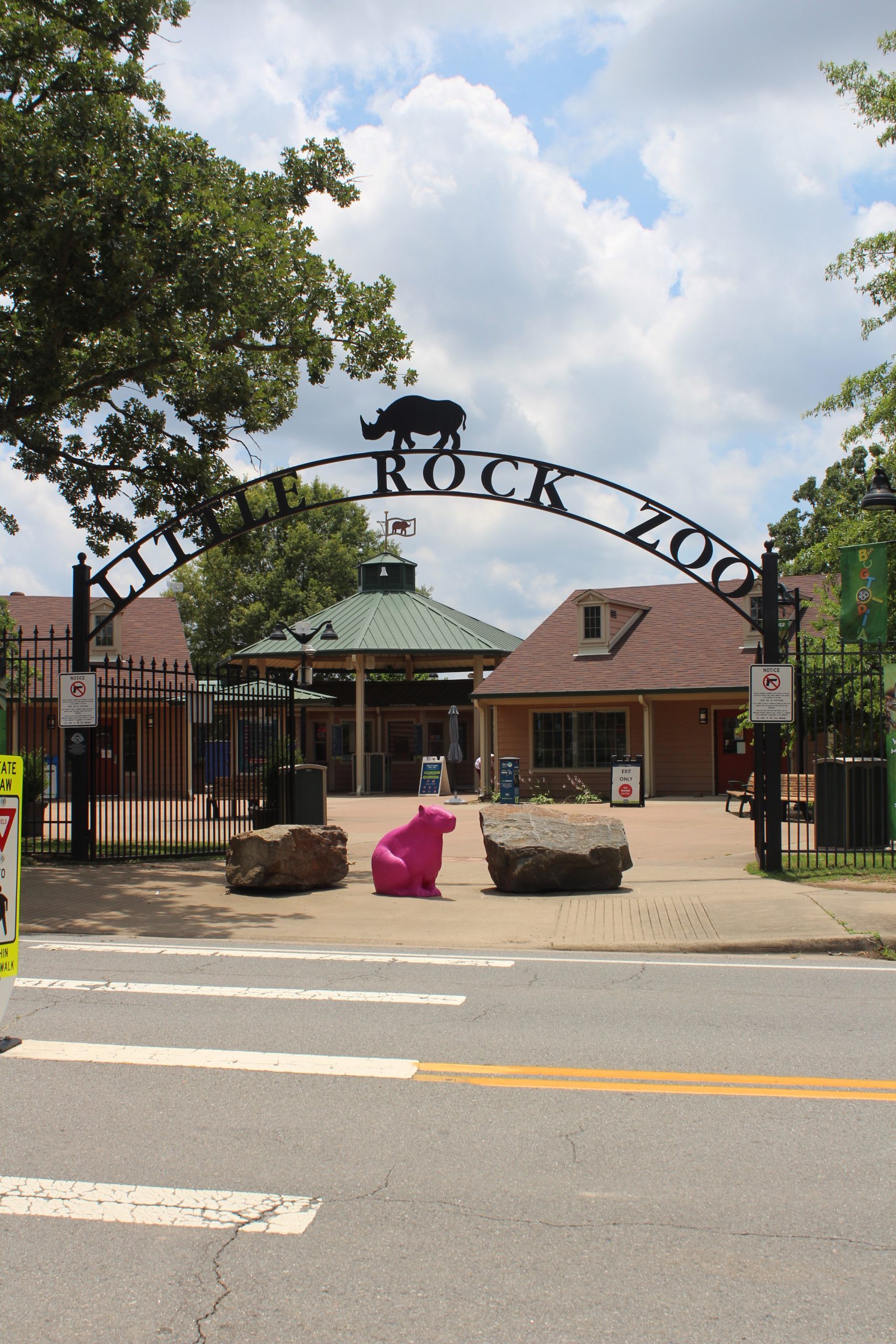
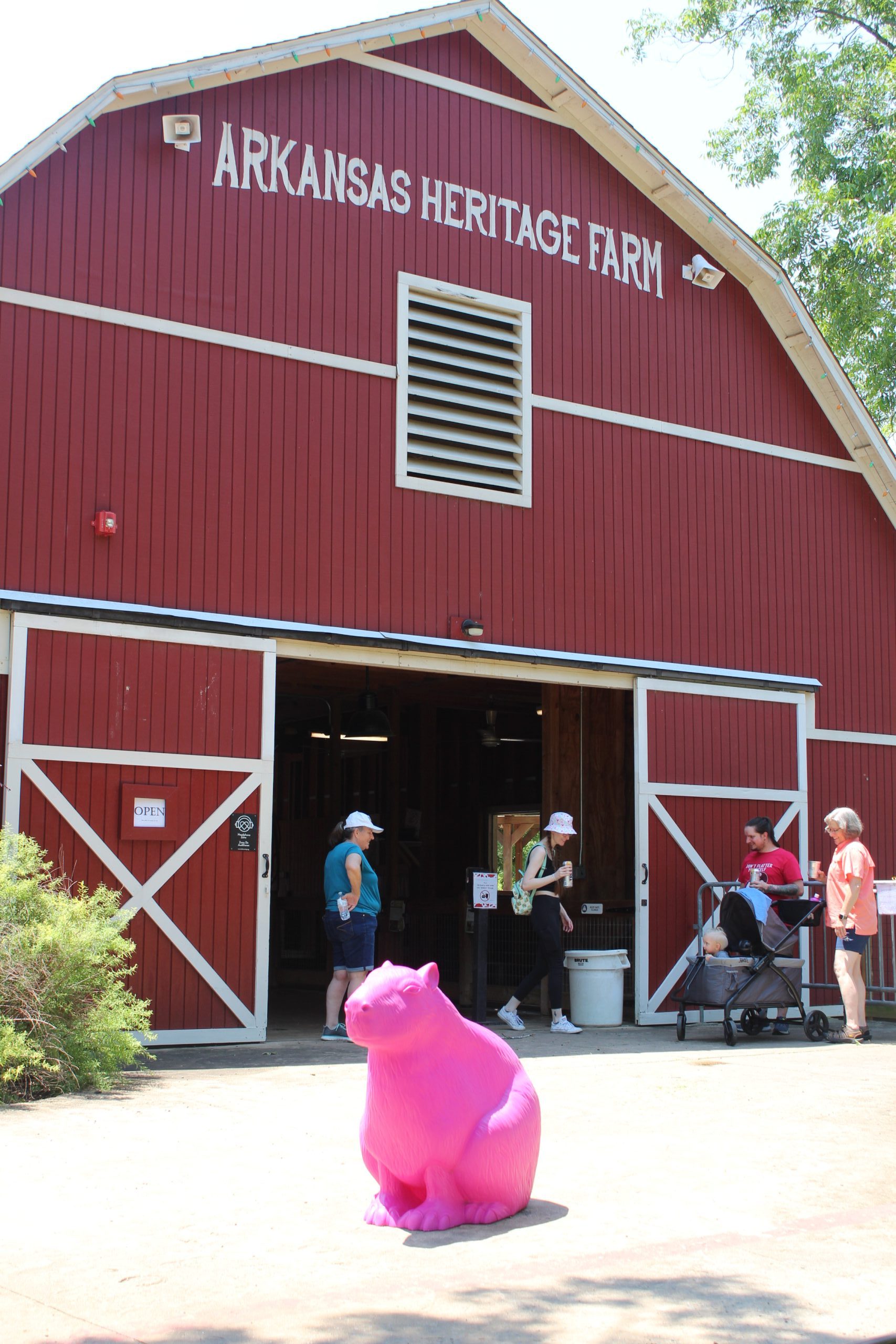
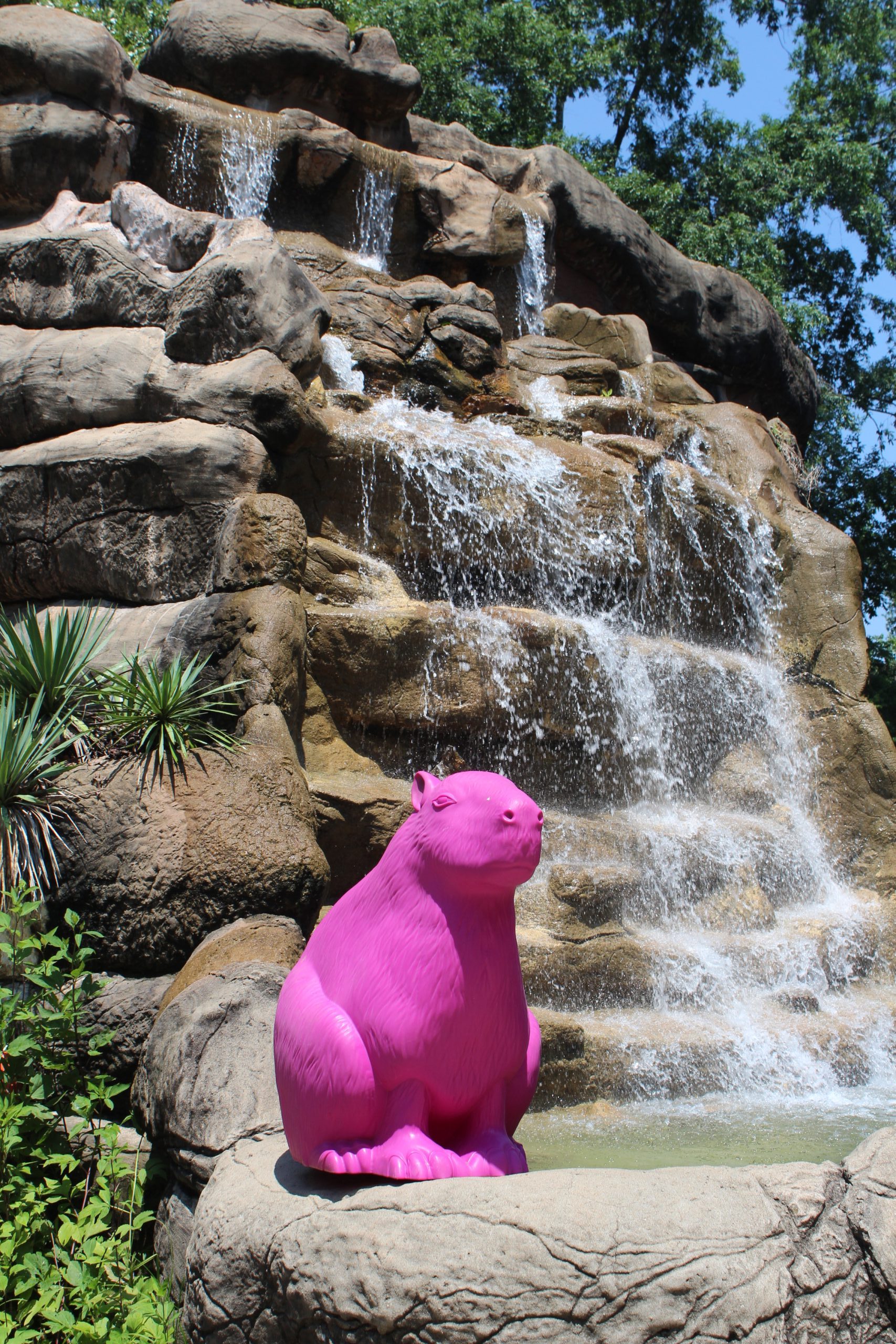
LITTLE ROCK, Ark. (June 2, 2026) – The Little Rock Zoo is celebrating the return of capybaras to the Zoo with the introduction of 22 interactive art sculptures that made their debut this week on Zoo grounds.
The real live capybaras will make their return to the Zoo when the Zoo completes the new Project Zoo: Wildly Reimagined construction project set to open soon. In the meantime, guests can help celebrate the return of capybaras by interacting with 22 lively art sculptures placed all over Zoo grounds. The sculptures are one-of-a-kind artworks designed and fabricated by internationally acclaimed Cracking Art Collective known for their whimsical animal sculptures. Made from regenerated plastic, the vibrant sculptures, featured in neon pink and orange, invite guests to explore, take photos, and engage with sustainability in a fun, interactive way. Guests might recognize other Cracking Art Collective projects such as the green penguins at the 21c Hotel in Bentonville. The capybara sculptures at the Little Rock Zoo were sponsored by the Arkansas Zoological Foundation and made exclusively for the Little Rock Zoo.
Cracking Art Collective said that their works “originate from a desire to convey a message that can reach and engage the public, encouraging interaction and empathy. For this reason, we are especially pleased about the collaboration with the Little Rock Zoo in the creation of the capybara. This animal, known for its cooperative social behavior, is able to live in large groups while maintaining a peaceful coexistence. It was therefore chosen as a symbol of an open, respectful community in dialogue with its environment,” said Cracking Art.
“These new sculptures will bring together two things our guests love, animals and experiences,” said Zoo Director Susan Altrui. “Capybaras are incredibly social and engaging, and pairing their return with this bold, sustainable art installation gives us a new way to connect visitors to conservation in a fun and meaningful way.”
The capybara sculptures are now available for view on Zoo grounds and are also available for sponsorship, with benefits including invitations to the Project Zoo: Wildly Reimagined grand opening, exhibit previews, special donor recognition, a framed certificate, and a professional photo.
The largest rodent in the world, the capybara, is twice the size of a beaver and can weigh up to 150 lbs. Capybaras are native to South America, with the largest population in Brazil. Unfortunately, they are threatened by humans who hunt them for their fur. Capybaras are strictly vegetarian, eating aquatic plants, grass and other vegetation.
For more information about the exhibit or to sponsor a sculpture, visit littlerockzoo.com/capys.
About Cracking Art
The Cracking Art movement was founded in 1993 with the aim of radically transforming the history of art through a strong social and environmental commitment. Combined with the innovative use of plastic materials, it highlights the increasingly close relationship between natural life and artificial reality. The term “Cracking Art” derives from the English verb “to crack,” which describes the act of splitting, breaking, or collapsing. “Cracking” is also the name of the catalytic process that breaks down petroleum molecules into monomers from which plastic is created: for the artists, this represents the moment when the natural becomes artificial, the organic becomes synthetic. It is precisely this transformation that they seek to represent through their art. The works are created to stimulate collective reflection on the impact of human activity on the natural environment through engaging performative actions, in which oversized installations—such as the iconic colorful animals—invade a wide range of spaces, from traditional art venues to everyday environments. Regenerating plastic means rescuing it from toxic and environmentally destructive disposal by giving it new life. Transforming it into works of art means communicating through an innovative aesthetic language while expressing a particular sensitivity toward nature. The collective dimension of the group does not limit individual expression: the artists also work independently, each interpreting, according to their own perspective, the issues and tensions of our time.
About the Zoo
The Little Rock Zoo is accredited by the Association of Zoos and Aquariums (AZA). Look for the AZA logo whenever you visit a zoo or aquarium as your assurance that you are supporting a facility dedicated to providing excellent care for animals, a great experience for you and a better future for all living things. With its more than 200 accredited members, AZA is a leader in global wildlife conservation and your link to helping animals in their native habitats. For more information, visit aza.org.
For more information on Little Rock Zoo, visit littlerockzoo.com or call 501-661-7200.